iGaming Officials Warn That Tax Changes Could Send Players to Offshore Sites


The National Council of Legislators from Gaming States hosted its 2026 Summer Meeting in San Diego from July 8-11. The meeting brings together legislators, regulators, and industry officials to discuss subjects like tax policy, enforcement, and prediction markets. (Photo: @NCLGS / X)
A group of iGaming officials said that tax increases and changes in federal tax law could drive players to unregulated sites, arguing that a balance must be reached between revenue and sustainability.
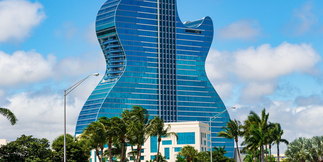
The comments were made during a panel focused on balancing revenue, competition, and sustainability in iGaming and sports betting at the National Council of Legislators from Gaming States (NCLGS) Summer Meeting, held July 8-11 at the Hard Rock Hotel San Diego in California.
The panel featured four speakers: Matt Hortenstine, general counsel at J&J Gaming; Cooley Arroyo, chief compliance officer at the New Hampshire Lottery Commission; Brian L. Oliner, general counsel at the Federation of Tax Administrators; and John Pappas, state advocacy director for iDEA Growth, an association representing the online gambling industry.
States Hiking Gaming Taxes with Little Warning
One major issue examined by the panel was the recent trend of states increasing their tax rates on sports betting and other forms of iGaming with little notice to operators. At least five states have done so since May 2025, when Maryland increased its online gaming tax rate from 15% to 20%. Louisiana, New Jersey, Illinois, and North Carolina have since instituted similar increases.
Illinois has had the most dramatic change, going from 15% on online sports betting revenue when it began regulating the industry in 2019, to a sliding scale of 20% to 40% on such revenue in 2024. With the state and the city of Chicago both imposing per-wager taxes, Illinois operators are sometimes facing effective tax rates of over 50% today.
“It’s a difficult thing for the industry to deal with, when states change the whole dynamic,” Pappas said during the panel. “It affects the whole ecosystem.”
Panelists also noted that high taxes can force operators to offer less competitive or outdated products, potentially leading them to fall behind unregulated competitors.
“If the rates are wrong, then it’s going to drive the consumer into a black market,” Oliner said. “You don’t want to drive people out of legal gaming into illegal gaming, because then the revenue isn’t there.”
All of that, panelists argued, requires more collaboration between states and operators to find the right balance.
“I think if you strangle the golden goose too much, it will stop laying,” Hortenstine said. “I think the industry and the lawmakers need to have better conversation about that.”
Gambling Deduction and Prediction Markets Also on the Agenda
Tax concerns don’t stop at the rates placed on operators. The reduction of the gambling loss deduction to 90% under the One Big Beautiful Bill Act was also a hot topic. The reduction of the gambling tax deduction to 90% of all losses. Ever since then, many have pointed out that some gamblers may owe taxes now even if they lose money playing during the year. Pappas said the change “most certainly is going to drive behavior.”
Tax policy wasn't the only hot-button issue at the meeting. Another popular topic at the conference was how state officials and regulators might address prediction markets. While most observers agree that the legal battles over whether states can prevent Kalshi, Polymarket, and others from offering sports-based contracts in their jurisdictions will ultimately be decided by the Supreme Court, panelists told legislators they shouldn’t wait for that decision.
Howard Glaser, head of government affairs and legislative counsel at Light & Wonder, told attendees that controlling payment processing is the best way to restrict payment processors from handling prediction market transactions. Without that, operators cannot function even if they win in federal court.
“You cannot run a prediction market if you can’t process the payments,” Glaser told attendees. “This is a free field for you, and I really believe it is the strongest possible action you could take while you wait for the Supreme Court.”
Meet The Author
Experience

Ed Scimia is an experienced writer who has been covering the gaming industry since 2008. He graduated from Syracuse University in 2003 with degrees in Magazine Journalism and Political Science. As a writer, Ed has worked for About.com, Gambling.com, and Covers.com, among other sites. He has also authored multiple books and enjoys curling competitively, which has led to him creating curling-related content for his YouTube channel, "Chess on Ice."
Read Full BioRelated News








Test Your Luck
Not Your Spam Filter
Sign up to receive emails and promotions from Casinos.com