Bonus Chasers, a $12K Slot Repair and a Guest Who Bites: ‘Secret Life of a Vegas Casino’ Ep. 8


Updated by Sandra Esparza
PR Specialist

Golden Nugget VIP Abe (right) isn’t happy when casino host Chuck (left) tells him his favorite slot machine is out of service, leading to a $12,000 repair in Episode 8 of “Secret Life of a Vegas Casino.” (Photo: Sandra Esparza / Casinos.com)
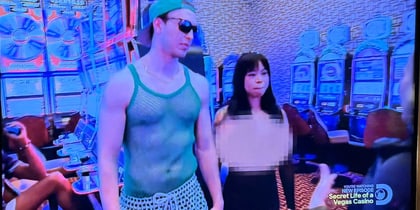
LAS VEGAS – There are plenty of ways to get someone off a slot machine, but apparently, some gamblers have decided that fart spray is one of them. In Episode 8 of Discovery's “Secret Life of a Vegas Casino,” the Golden Nugget goes undercover to catch a group of suspected bonus chasers accused of harassing players out of potentially profitable slot machines. Meanwhile, a longtime high roller threatens to take his money elsewhere over a broken machine, and a couple's night out ends with alleged assaults on security officers and an unexpected reunion with Metro Police.
Between a $12,000 replacement part, a casino-floor sting operation and a guest who apparently doesn't understand what a trespass warning means, the Golden Nugget staff has its hands full.
Bonus Chasers Are Giving Security a Headache
The Golden Nugget is dealing with a growing problem involving what the security team calls bonus chasers, gamblers who roam casino floors looking for slot machines that may be approaching a valuable bonus. Unlike most people who sit down, pick a machine and hope for the best, bonus chasers pay close attention to games with built-in progressions. Certain features accumulate as people play, and experienced players can sometimes recognize when a machine presents a more favorable opportunity.
The strategy itself isn't necessarily illegal. In fact, Golden Nugget management compares bonus chasers to card counters, describing them as advantage players who understand how to identify potentially profitable situations. The problem is that some aren't particularly willing to wait their turn.
Security officials explain that certain bonus chasers work in organized groups, with someone known as a banker supplying the money while others scout the floor for promising machines. When a member wins, the group splits the money. Unfortunately, there's often another gambler standing between them and the machine they want.
According to security, some of these individuals have resorted to intimidating guests, standing uncomfortably close, whispering in their ears and invading their personal space until they get frustrated enough to leave. And apparently, personal space isn't the only thing under attack.
Staff members say some bonus chasers have even used foul-smelling products designed to mimic flatulence in an effort to drive people away from their seats. Because nothing says responsible gambling like trying to gas somebody out of a jackpot.
The situation has reportedly become physical on occasion, too. Security reviews surveillance footage showing a suspected bonus chaser hovering over a seated guest before the encounter escalates.
Management has seen enough. Rather than continue responding to complaints after the fact, the team decides to send an undercover officer onto the slot floor to catch someone in the act.
Undercover at the Slots: A $20 Offer and a Confrontation
Surveillance soon spots a familiar suspected bonus chaser wandering through the casino, apparently scanning the machines for favorable opportunities. The man eventually sits near a woman wearing a cream-colored sweater and begins talking to her about the game she's playing. He appears to be discouraging her from continuing, suggesting she's wasting money and would be better off trying something else.
Security believes the machine she's playing may have accumulated a valuable bonus progression, making her a potential target. An undercover officer moves into position with a miniature camera capable of recording audio and video. Another officer remains nearby as backup, while surveillance monitors the encounter from above.
The operation takes an interesting turn when the suspected bonus chaser leaves another machine unattended. The undercover officer sees his opportunity and takes the seat. The man returns almost immediately and isn't happy.
He insists he'd only stepped away for a few seconds, pointing to a drink he'd left behind as evidence that the machine was occupied. The undercover officer maintains that the seat was empty when he arrived and that he's entitled to play. What follows is an increasingly heated argument over who gets to gamble.
The suspect offers the officer $20 to leave the machine, but the undercover employee refuses. The exchange grows more personal, with the man questioning whether the officer is a local and making comments about his appearance.
Security also reports that the suspect blows cigarette smoke toward the officer's face and eventually makes physical contact with him. At this point, what started as an argument over a slot machine has turned into the exact confrontation management was hoping to document.
The undercover officer says the physical contact provides grounds to detain the man over an alleged battery, giving the team an opportunity to question him about the larger bonus-chasing operation. It's quite a bit of trouble to go through for a particular seat, especially considering there are hundreds of other slot machines throughout the casino. But then again, apparently not every seat comes with the same earning potential.
The Good Cop, the Bad Cop and the Bonus-Chasing Ring
The suspected bonus chaser is brought in for questioning, where security hopes to learn more about the group believed to be operating around the property. The undercover officer is joined by another manager, creating what he describes as a good-cop, bad-cop dynamic. He acknowledges that he can become frustrated during these encounters, while his colleague is better at keeping conversations calm.
The suspect insists he did nothing wrong, arguing that he'd only stepped away briefly before finding someone else in his seat. Security isn't convinced.
The managers explain that surveillance has been monitoring the man and other suspected bonus chasers, and they believe the group is working together to identify machines and divide winnings. They also make it clear that physical confrontations are a different matter from simply looking for favorable slot opportunities. The alleged contact with the undercover officer could bring Metro Police into the situation.
But there's a problem: Officers are backed up, and security is told the wait could be approximately six hours. Rather than hold the suspect for that long, management decides to formally trespass him from the Golden Nugget, warning that returning to the property could result in arrest.
The team doesn't get the full breakdown of the suspected bonus-chasing operation it was hoping for, but it does remove one person accused of harassing guests. Security still believes the problem extends beyond this individual and intends to keep watching for others who may be operating in the same group. For the average gambler, the message is pretty straightforward: You shouldn't have to fight off another player just to finish a slot session.
Related Reads
A $12,000 Slot Machine Repair for One Very Particular VIP
While security is dealing with people who are desperate to get their hands on certain slot machines, casino host Chuck is facing the opposite problem. His longtime VIP Abe has arrived at the Golden Nugget expecting to play his favorite machine, only to discover that it's broken. And Abe is not pleased.
He's been visiting the property for roughly three decades and is one of Chuck's biggest slot players. According to Chuck, Abe can generate millions of dollars in annual coin-in, which refers to the total amount wagered through a machine, including money played again after a win.
For example, a player who starts with $1,000 could eventually cycle $10,000 through a machine by repeatedly wagering winnings. It's an important distinction, particularly when the casino is deciding how much to invest in keeping a customer happy. Abe, however, isn't interested in the numbers. He wants his machine.
His favorite is an old-school pinball slot featuring traditional mechanical reels, familiar sounds and the kind of nostalgic gaming experience that has largely given way to modern video slots. Chuck points out the countless alternatives, but Abe isn't impressed. As far as he's concerned, the newer machines look more like video games than actual slot machines. The cartoon animals aren't helping, either.
When Chuck shows him a game filled with colorful symbols, Abe compares it to breakfast cereal. He's equally unimpressed by machines featuring pigs, dragons and other animated creatures.
The man has been gambling in Vegas for decades, and apparently he's not about to start betting on farm animals now. Abe threatens to take his business elsewhere if the Golden Nugget can't get his pinball machine running again. Chuck knows that's a serious possibility, especially considering how much money his guest brings to the property.
To buy himself some time, Chuck offers Abe $1,000 in complimentary play to try one of the newer machines while he investigates the problem. Abe reluctantly agrees. He might hate video slots, but he's apparently willing to hate them for free.
Chuck then heads to Tom, the Golden Nugget's executive director of slot operations, hoping for a relatively simple solution. Unfortunately, there's nothing simple about repairing a machine that's practically old enough to have its own Vegas residency.
Tom oversees approximately 900 slot machines and explains that deciding which games belong on the casino floor involves far more strategy than most people realize. He considers everything from placement and lighting to how machines attract guests entering from Fremont Street. According to Tom, slots generate three to four times more revenue than table games in downtown Las Vegas, making the right selection especially important. As for Abe's beloved machine, Tom has bad news.
The game is outdated, increasingly expensive to maintain and missing a critical component. He had already been planning to remove it from the floor. Chuck isn't having that answer. He explains that Abe puts substantial money through the casino's machines and that losing the player could cost considerably more than an expensive repair.
Tom agrees to search for the missing part, but there's another complication: The machine requires an older CPU that suppliers are having trouble locating. Eventually, his team finds one. The price? A whopping $12,000.
Under ordinary circumstances, Tom would never approve that kind of expense for a machine already scheduled for retirement. But after weighing the cost against Abe's gaming activity, he decides the investment is justified. The replacement part is ordered, and Chuck can finally deliver some good news. There's just one small problem.
Abe Discovers He Actually Likes Video Slots
While the team is working to bring his old favorite back to life, Abe has been spending his complimentary $1,000 on one of those newer machines he was so quick to criticize. And wouldn't you know it? He's having a great time.
Chuck checks in to find Abe enthusiastically playing, watching the colorful symbols appear and celebrating the bonus features he previously dismissed as nonsense. He still doesn't entirely understand what's happening on the screen, but that doesn't seem to matter now that the numbers are going in his favor.
Chuck informs him that the necessary part has been found and the pinball machine is being repaired. Abe appreciates the update and initially seems eager to return to his favorite game.
When Chuck comes back later, the repair is complete. After multiple phone calls, a hunt for an outdated component and $12,000 in expenses, Abe's beloved machine is finally available. Except Abe doesn't want to leave his new one.
He's winning, he's enjoying himself and, as any gambler will tell you, walking away from a machine that seems to be running hot isn't particularly appealing. Chuck is understandably stunned.
The same man who threatened to abandon the casino rather than play a modern video slot is now perfectly happy sitting in front of one. Abe even jokes about wanting to keep playing the new game, leaving Chuck to wonder why he spent so much effort getting the pinball machine repaired.
But the outcome isn't entirely bad. Abe is happy, he's still gambling at the Golden Nugget and Chuck has kept one of his most valuable customers from taking his business down the street.
Sometimes being a casino host means giving people exactly what they want. Other times, apparently, it means spending $12,000 to discover they wanted something else all along.
A Poolside Problem Gets Physical
Elsewhere at the Golden Nugget, security is dealing with a couple whose behavior has escalated well beyond an ordinary disturbance. Officers recount an incident involving a husband and wife being removed from the property after trouble near the pool area.
During the escort, the husband becomes increasingly argumentative, while his wife begins screaming and resisting officers. The situation turns physical when the woman allegedly assaults members of the security team. One officer says she kneed him in the groin and bit him near his knee, although his protective equipment prevented the bite from breaking the skin. Security reports four battery incidents involving the woman and officers responding to the disturbance.
The husband isn't exactly helping matters, either. He's accused of shoving a member of the documentary camera crew and threatening security personnel. Both are taken into custody while the team waits for Metro. If that seems like enough excitement for one couple, apparently the husband disagrees.
Later in the episode, surveillance notices a familiar man returning to the Golden Nugget, despite having already been told he's no longer welcome on the property. It's the husband, now wearing a blue baseball cap and white shirt.
Security immediately recognizes him and sends officers to intercept him. At first, it appears he may be leaving voluntarily, but then he changes direction and approaches Metro officers inside the property. An interesting choice for somebody who's already been told to stay away.
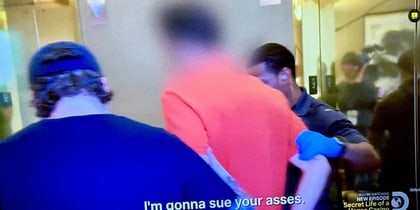
The man begins arguing with police, reportedly refusing to leave despite the previous trespass warning. The confrontation escalates until officers take him to the ground and place him in handcuffs.
Security explains that the woman was already facing consequences for the alleged assaults, while her husband is now being arrested for returning to the property after being trespassed. The couple may have arrived together, but their evening has taken a rather different turn than whatever they originally had planned. And while it's probably safe to assume they won't be leaving the Golden Nugget a glowing review, management makes it clear that keeping the property safe sometimes means telling guests they can't come back.
Keeping the Players Happy, Without Losing Control
By the end of the episode, the Golden Nugget has dealt with a suspected bonus-chasing operation, a confrontational guest, an expensive slot machine repair and another customer who apparently needed Metro Police to explain what a trespass warning means. For Chuck, the priority was keeping a longtime player happy, even if it meant going to extraordinary lengths for a machine that ultimately lost its appeal.
For security, the challenge was protecting guests from individuals whose behavior can turn an ordinary gambling session into an uncomfortable or potentially dangerous encounter. Management points out that running a casino isn't simply about offering the right games, restaurants or hotel rooms. The experience matters, and one bad interaction can be enough to convince someone never to return.
Fortunately, Abe has discovered a new favorite slot, the suspected bonus chaser is no longer welcome and security has dealt with the returning guest. As for the reports of bonus chasers using fart spray to clear out slot machines, perhaps the Golden Nugget should add one more rule to its gaming floor. If you can't win without making everybody around you miserable, maybe gambling isn't your game.
Meet The Author

LAS VEGAS -- Sandra Esparza is a Digital PR Specialist for Grandstand with five years of experience in public relations, media relations and brand storytelling across the gaming, hospitality and entertainment industries. Prior to joining Grandstand, she worked at Las Vegas PR stalwart Kirvin Doak Communications, where she spent nearly three years supporting public relations efforts for Rio Hotel & Casino and other prominent Las Vegas hospitality and entertainment brands. Her background spans in-house, agency and freelance PR, with experience building strong media relationships and securing coverage across print, digital and broadcast outlets. When not doing PR she can be found binging just about every reality tv show.
Read Full BioRelated News










Test Your Luck
Not Your Spam Filter
Sign up to receive emails and promotions from Casinos.com