'Mother's Day Massacre' to 'Philadelphia Freedom': How Tennis, Gambling and Showbusiness Converged


Inaugural WUSA game between the Washington Freedom and the Bay Area Cyberays on April 15, 2001, at RFK Stadium, in Washington DC. (Image: Tony Quinn/Alamy)
Just as people around the world are putting away their dinner plates having celebrated Mother's Day, Casinos.com took a look at an historic event that took place between a tennis champion and mother and a male tennis pro known for his chauvinist stance on women.
Long before celebrity boxing, crossover fights and betting markets built around hype, tennis produced one of the clearest early examples of sport sold as spectacle.
In 1973, Bobby Riggs turned a pair of exhibition matches against Margaret Court and Billie Jean King into something bigger than tennis: a made-for-TV mix of provocation, performance and wagering intrigue. The result helped show how sport, celebrity and gambling psychology could feed each other, a formula that now feels standard across modern sports entertainment and online casinos.
The Match That Changed the Stakes
Riggs, a former Wimbledon champion and self-promoter with a long reputation as a hustler and gambler, first challenged King, then one of the biggest names in women’s tennis. She declined at first, wary that the event would trivialise women’s sport. Court, the reigning Australian Open and French Open singles champion in 1973, accepted instead.
Their match was played on 13 May 1973, Mother’s Day, in Ramona, California. Riggs beat Court 6-2, 6-1 using a mix of lobs, drop shots and off-speed tactics that threw her off rhythm. The upset quickly became known as the ‘Mother’s Day Massacre’. Contemporary and later accounts agree the match drew about 5,000 fans, and it transformed Riggs from a novelty act into a credible attraction.
That mattered beyond the scoreboard. Riggs had shown he could sell not just a tennis match, but a storyline. For audiences and bettors, the stunt no longer looked like pure comedy. It looked live.
Billie Jean King Turns the Circus Back on Riggs
After Court’s loss, the rematch the public really wanted was the one Riggs had sought all along. King agreed to face him later that year in Houston.
The 20 September 1973 showdown at the Astrodome became a global media event. Sources vary on the exact television audience, with some contemporary and retrospective accounts putting it at about 50 million and King’s official site saying 90 million watched worldwide. Attendance figures are similarly reported as roughly 30,000 to more than 30,400. What is not in dispute is the scale: it was one of the most watched and most theatrical tennis events ever staged. One wonders what kind of audience and gambling frenzy that game would attract today.
King learned from Court’s defeat. Rather than getting dragged into Riggs’ cat-and-mouse style, she kept him moving and took control of the pace. She won in straight sets, 6-4, 6-3, 6-3, flipping the script on the man who had cast himself as the sexist villain. The match became far more than an exhibition. It was a cultural flashpoint in the wider argument over women’s sport, equal respect and public visibility.
The Geneder Issue Beyond the Realms of Tennis
The reason the 1973 matches still resonate is not only the gender politics. They also offered an early template for events built as much on narrative as athletic merit.
Riggs understood that outrage could drive attention. Attention could drive audiences. Audiences could drive betting interest. That feedback loop is now familiar across sports books and promoters selling celebrity bouts, novelty contests and crossover events, but it was already visible in the Battle of the Sexes.
The Court match created uncertainty. The King match turned that uncertainty into a global entertainment property.
Elton John Immortalises King in Pop Culture
King’s reach soon extended well beyond tennis. She played for and later coached the Philadelphia Freedoms in World TeamTennis, becoming the first woman to coach a coed professional sports team. Elton John, a friend and supporter, wrote ‘Philadelphia Freedom’ as a tribute to King and the team. The song was released in 1975 and became one of his signature US hits.
That gave the story an unlikely second life. What began as a tennis spectacle rooted in gender politics and showmanship moved into mainstream pop culture. The match was no longer just remembered as a sports event. It had become part of a wider entertainment mythology.
The Las Vegas Through Line
There is also a neat casino-world echo. Riggs fitted the classic image of the gambler-showman, a figure who knew that the action around the event could matter as much as the contest itself. Elton John later became one of the defining stars of the Las Vegas residency era at Caesars Palace, first with The Red Piano and then with The Million Dollar Piano. His two runs there totalled 450 shows.
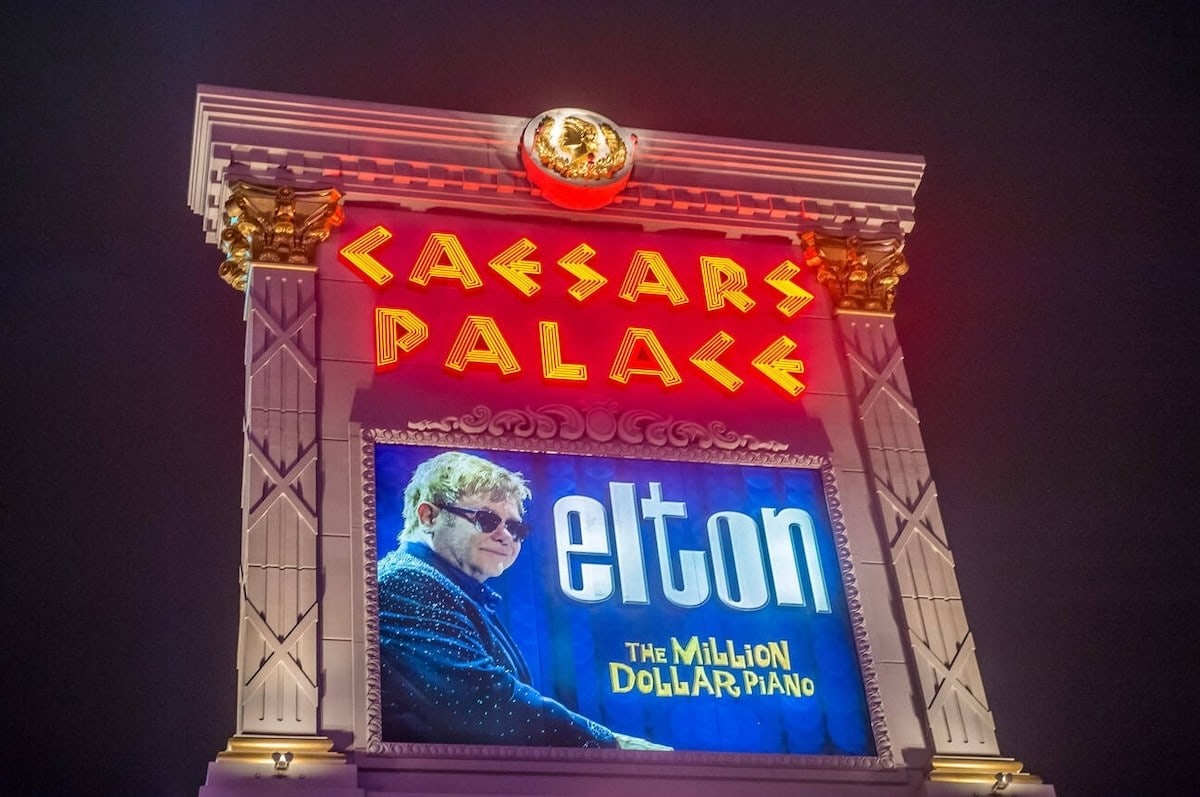
The Elton John show poster at Ceasars palace hotel in Las Vegas. (Image: Yaacov Dagan/Alamy
That does not make the 1973 tennis matches a Las Vegas production before Las Vegas got hold of them. But it does show how closely linked these worlds became: elite sport, celebrity performance, theatrical promotion and gambling culture all feeding off the same appetite for drama. Las Vegas theatre is known throughout the world and as the Sphere hosts nostalgic nods to history one wonders whether that match may make it onto the big screen as a film one day.
The path from the ‘Mother’s Day Massacre’ to ‘Philadelphia Freedom’ was not as strange as it sounds. It was an early demonstration that sport could be sold as theatre, and that the theatre itself could become the main event.
The New Challenge for Women in F1
More than 50 years on, the conversation about women competing at the highest levels of sport continues. The last woman to compete in an F1 race was Italy's Lella Lombardi in 1976. Only 10% of drivers currently involved in motorsport are women, according to the most recent study.
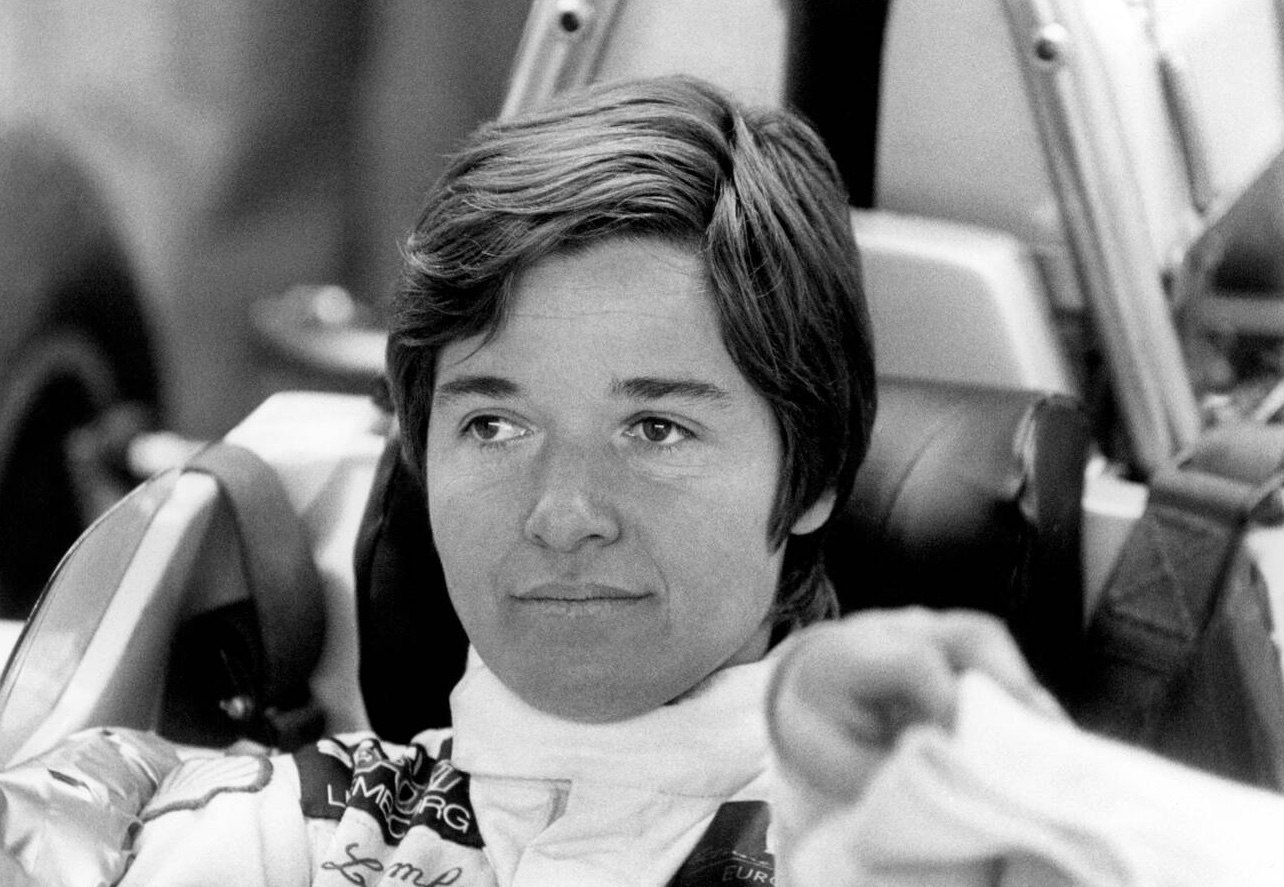
Lella Lombardi (the only female driver to record a top six finish in a World Championship Formula One Grand Prix). (image: PA Images/Alamy)
A new generation of female athletes, including rising motorsport drivers such as Rachel Robertson, Esmee Kosterman and Alba Larsen in Formula 1’s F1 Academy, are attempting to break barriers in male dominated arenas just as King did on the tennis court.
Their push for visibility and equality reflects the same wider debate about opportunity, perception and performance that surrounded the 1973 matches. While the sports and stakes may differ, the central question remains familiar: how long will it take for women to compete regularly at the very top level of global sport?
Watch: More Than Equal: Getting more females on the ladder to F1
Meet The Author
Experience

 News Writer
Most of my career was spent in teaching including at one of the UK’s top private schools. I left London in 2000 and set up home in Wales raising four beautiful children. I enrolled at University where I studied Photography and film and gained a Degree and subsequently a Masters Degree. In 2014 I helped launch a new local newspaper and managed to get front and back page as well as 6 filler pages on a weekly basis. I saw that journalism was changing and was a pioneer of hyperlocal news in Wales. In 2017 I started one of the first 24/7 free independent news sites for Wales. Having taken that to a successful business model I was keen for a new challenge. Joining the company is exciting for me especially as it is a new role in Europe. I am keen to establish myself and help others to do the same.
Read Full BioTest Your Luck
Not Your Spam Filter
Sign up to receive emails and promotions from Casinos.com