'Luck of the Irish' - The Biggest Bluff in Gambling?


Walk into any casino, physical or digital, and you will not be far from a shamrock. Irish-themed slots are among the most popular games in the world. Rainbow Riches, Clover Rollover, Luck O' the Irish: the titles alone paint a picture of a culture synonymous with good fortune. Green reels spin, leprechauns wink, and pots of gold shimmer invitingly just beyond a cartoon rainbow. It is all very charming. It is also, if we are being entirely honest about it, a considerable load of blarney.
Here is the craic: the Irish are not actually lucky and the popular saying is a load of rubbish. Trace the "luck of the Irish" all the way back to its roots and you will find not a pot of gold but a myth, one built on misread history, commercial convenience, and a cultural tradition that tells a very different story altogether.
So, before you let a leprechaun guide your next online casino bet, it is worth knowing what he is actually standing on.
A Myth Made in America
The phrase "luck of the Irish" is not ancient Celtic wisdom. In fact, it was coined in 19th century America during the gold and silver rushes, when a number of successful miners happened to be Irish immigrants. Rather than crediting their hard work and admitting their own failures, competitors put it down to luck.
It wasn’t in a particularly nice way either, given the Irish faced significant discrimination at the time.
Over time the irony was lost and the phrase was repurposed into something cheerful. By the time St. Patrick's Day became a global commercial event, the lucky Irish were firmly established as fact. Never one to miss a trick, the casino industry jumped on that immediately and leveraged gamblers’ propensity for superstition against them.
🍀 Feeling Lucky?
The Irish may not be as fortunate as the legends suggest, but our collection of Irish-themed slots is packed with gold, green reels, and enough blarney to keep you spinning. Whether you are chasing a leprechaun's pot of gold or just fancy a flutter on the emerald reels, we have got you covered.

Real Irish Fairytales
All of this is not to say, of course, that there is not plenty of authentic Irish folklore. Ireland is actually one of the most folklore-rich countries in the world. However, the actual folklore paints a very different picture to the happy, cheery, helpful lucky leprechaun you tend to see on your slot machines.
The Aos Si are the fairy folk of Irish tradition, and they are NOT charming helpers. They are powerful, indifferent, and often malicious. People often left offerings at certain trees and stones not to invite good fortune but to avoid drawing hostile attention.
Meanwhile, certain places, bogs, lone hawthorn trees and even crossroads, were considered dangerous zones where the boundary between the human and supernatural worlds ran dangerously thin. Much like the boundary between your wallet and an empty pocket on a bad night at the tables.
There are also a lot of mythical Irish creatures that you are not seeing on slot machines. The Banshee, for example, wails to announce death, not to offer you a heads up you can act on. The Dullahan rides with his own severed head, and wherever he stops, someone dies. The Sluagh, restless hostile spirits of the dead, came from the west at night to steal souls from the dying.
There is one more key theme running through Irish folklore too: the idea that fate is fixed, the very antithesis of the idea of lucky charms.
If you’re looking for a connection between Irish mythology and casinos, you won’t find it in lucky charms. You’ll find it in the uncomfortable suspicion that the outcome was decided long before the first spin. Which, come to think of it, is exactly how the house prefers things.
“Truth is, if slot makers followed real Irish mythology, the reels wouldn’t be full of smiling leprechauns handing out gold. They’d feature the Banshee wailing, the Dullahan arriving when fate’s already sealed, and the Sluagh drifting in from the west. Irish folklore was never about lucky charms, it was about fate. And if you’ve spent enough time around casino tables, you’ll know that idea feels strangely familiar.”

The Not So Helpful Leprechaun
If you have played an Irish themed slot machine, you will probably have been seduced by a lovely lucky little leprechaun throwing gold around in your favour. However, the leprechaun is the starkest example of how thoroughly the original folklore has been reinvented.
In authentic Irish tradition, leprechauns were solitary, grumpy cobblers who hoarded gold and gave none of it away. The only way to get their treasure was to catch one and not break your gaze, because the moment you looked away, he vanished faster than your chips on a cold streak.
Leprechauns were not lucky companions; they were adversaries who were supernaturally skilled at misdirection for their own gain. The jolly, gold-dispensing mascot of modern casino culture does not exist. However, a leprechaun who tricks you out of your gold whilst you think they’re there to help you get rich is perhaps the most apt for symbology for casinos you can think of, especially when one good day is all you need to escape with all their gold.
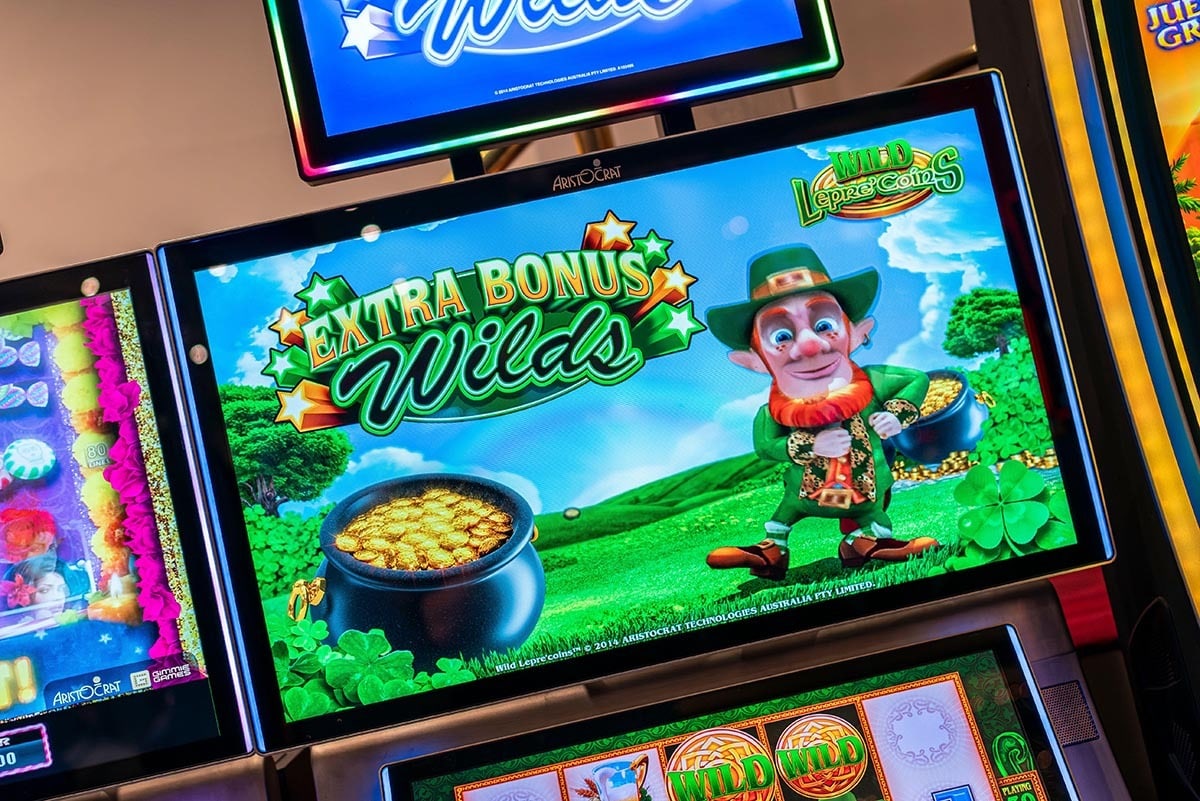
Irish Themed Slots Still Sham-Rock Our World
None of this means Irish-themed games are not worth playing. A spin on Rainbow Riches is a grand time, and there is no shame in enjoying the craic of a well-designed slot.
The point here is simply to understand what the shamrock actually represents: clever branding built on a borrowed myth, not a blessing handed down from the Celtic gods.
The leprechaun is not rooting for you. The shamrock on the reel is a design choice, not a charm. The pot of gold at the end of the rainbow has, statistically speaking, already been collected by the house.
That said, Irish slots are fun. Loads of fun, in fact. They’re packed with personality, identity, and well, charm. Irish charm is definitely still a thing, even if Irish luck isn’t so much.
Play them, love them, sing along and have a little jig with your small green on-screen friend. Just because you're in on the sham(rock) it doesn't mean you can't still enjoy it.


My Top Recommendations

If learning all about Irish fate and folklore has you in the mood to take some slots for a spin, then check out these.

"This ancient relic from Barcrest may be dated and sluggish, but it has all the class of a Rolls-Royce. With t'ree different bonus games, it should be enough to rev your engine."

"Playtech slots have more features than a Tesla. It's a dynamic game that also has a look which no other slot developer has since matched. Take a seat and give it a spin."

"With a top jackpot of $18,000,000. This PG Soft slot is putting players in the fast lane of Millionaire Road. It's worth the ride, as you'll be cashing out, not crashing out."

"Lucky Lad Flynn struttin' around in sunglasses, mushrooms that look like they came from a suspicious fairy picnic, and a Wheel of Fortune bonus tossing out Free Spins and multipliers like a carnival trick."
Meet The Author
Experience

Lynsey is a regular Las Vegas visitor and a keen slots and roulette player. As well as significant experience as a writer in the iGaming and gambling industries as an expert reviewer and journalist, Lynsey is one half of the popular Las Vegas YouTube Channel and Podcast 'Begas Vaby’. When she is not in Las Vegas or wishing she was in Las Vegas, Lynsey can usually be found pursuing her other two main interests of sports and theatre.
Read Full BioTest Your Luck
Not Your Spam Filter
Sign up to receive emails and promotions from Casinos.com