

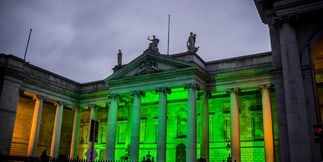
The Supremo Tribunal Federal in Brasília, where a public hearing on the online betting ban was held on 3 November. (Photo: Daderot / Wikimedia Commons)
Brazil's Supreme Federal Court (STF) held a public hearing on 3 November 2026 to weigh the effects of Provisional Measure 1.394/2026, the decree that banned online betting and ended the authorisations granted to operators. Justice Luiz Fux, who called the hearing, heard from 26 institutions, including government bodies, football clubs, industry groups and researchers.
The hearing does not decide the case. It gathers evidence for the justices who will rule on challenges to the ban, which took effect when betting sites, apps and sponsorships went offline on 6 October. Congress must also vote on the measure for it to become permanent law.
Why the Court Called a Second Hearing
According to the court's own report, the hearing follows new legal questions raised after the measure was issued. Four direct actions of unconstitutionality, ADIs 8024, 8027, 8028 and 8035, challenge the decree. Three earlier ADIs, 7721, 7723 and 7749, target the 2023 Betting Law (Law 14.790/2023) itself. Fux is rapporteur of ADI 8027.
Fux said the evidence from a first hearing in November 2024, when more than 50 experts spoke over two days, would be considered. New points include legal certainty, non-retroactivity, the protection of legitimate expectations, and whether the constitutional tests of relevance and urgency for a provisional measure were met. The Brazilian Supermarkets Association (Abras) was added to the speaker list.
The Government's Case
Government speakers defended the ban as a response to household debt, mental health harm and organised crime. Attorney General Jorge Messias argued that regulation had not delivered the protection the constitution requires, saying the state has a duty to act when safeguards prove insufficient. Health Minister Alexandre Padilha said 28 million Brazilians had bet in the past 12 months, 10.9 million of them showing risky or problem behaviour.
Abras told the court that food sales rose 6.5% in the week of 5 to 11 October and 6.3% the following week compared with the same weeks of 2025, which it read as a sign of recovering household spending. In his opening remarks, Fux said the gambling model draws its profit from the vulnerability of bettors themselves.
Clubs Warn of Lost Sponsorship
The sports sector warned of heavy losses. According to CNN Brasil's coverage of the hearing, Flamengo estimated it would lose R$430 million a year, Fluminense R$200 million, and Vitória said betting contracts worth R$45 million made up about 17% of its revenue. The Brazilian Football Confederation (CBF) said the ban stopped talks on sponsorship for 2027 to 2030 and could cost R$420 million next year.
Clubs and operators also argued that prohibition pushes players towards unlicensed sites rather than ending demand, and that stronger enforcement would protect consumers better. Operators are watching for any sign the court might suspend the decree, as the government has already asked the court to strike down parts of the betting laws while industry bodies have sought a suspension of the ban.
The next steps are a ruling from the court and a vote in Congress, a fight that Lula's re-election has sent to Congress and the Supreme Court. Until then, licensed betting stays offline across Brazil, and operators including Flutter have said they are ready to resume if a workable regulatory framework emerges.
Meet The Author
Experience

Natasha Alessandrello is a Senior Editor in the Casinos.com content team. She began her career as a Features Writer for several weekly and monthly magazines, and has a decade’s worth of experience in writing, researching and editing casino content. She is interested in all equine sports, and enjoys blackjack and the occasional game of poker.
Read Full BioRelated News







Test Your Luck
Not Your Spam Filter
Sign up to receive emails and promotions from Casinos.com