New Jersey Appeals Court Shines New Light on Atlantic City Casino Smoking Case


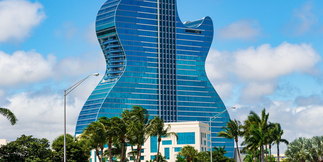
A casino patron smokes while playing a slot machine at Hard Rock Casino in Atlantic City, where smoking remains legal on part of the gaming floor. (Photo: Wayne Parry/ AP)
A ruling in a New Jersey state appeals court has restarted a long-running legal challenge in the case over whether New Jersey’s casino exemption to the state’s smoking ban violates the state constitution.
The Appellate Division of the New Jersey Superior Court found that Judge Patrick J. Bartels erred in his 2024 decision that dismissed the complaint filed by Casino Employees Against Smoking’s Effects (CEASE) and the United Auto Workers Region 9.
Panel Finds Multiple Errors in Initial Ruling
At the time, Bartels ruled that the exemption for casinos didn’t violate the rights of workers, as it only impacted a specific industry and didn’t prevent workers from seeking employment in venues where smoking was banned under New Jersey’s 2006 Smoke-Free Air Act.
But the appellate court disagreed, saying that Judge Bartels failed to properly address the equal protection challenge to the exemption and did not perform detailed fact finding related to the case.
Judge Jack Sabatino, writing for the three-judge panel hearing the case, said the lower court judge improperly accepted projections of revenue losses by casinos if they implemented a smoking ban implicitly, without considering alternative studies that show little or no losses by venues that have such bans.
“The trial court improvidently accepted at face value respondents’ disputed economic contentions and the untested premise that ending the smoking exemption will inexorably result in drastic revenue and job losses, without a development of a fuller record,” Sabatino wrote.
In addition, the panel found that Bartels only considered whether there was any rational reason for a carveout for casinos in the Smoke-Free Air Act. That failed to follow the three-part balancing test that has been used to consider equal protection cases that consider the New Jersey Constitution.
Sides Disagree on Health, Financial Impacts of Smoking
As a result, the panel found, the case must be given another look with the proper considerations taken into account. These considerations would specifically include competing expert testimony on both health risks and economic consequences.
“Such findings are especially crucial to the ultimate disposition of plaintiffs’ state equal protection arguments, with the health of thousands of casinos employees and, perhaps, millions of dollars at stake.” Sabatino wrote.
Currently, smoking is allowed on up to 25% of casino floors in Atlantic City. Casino operators – and some employees – maintain that the partial allowance is enough to protect worker health. Operators often cite a 2008 attempt to implement smoke-free casinos in Atlantic City, when revenues dropped nearly 20% in a two-week period.
However, CEASE and some unions have said that workers fear for their health due to long-term smoke exposure on the job and casino patrons now prefer smoking bans. They also point out that the prohibition smoking in Atlantic City casinos during the COVID pandemic had little obvious impact on gaming revenues at the time.
Meet The Author
Experience

Ed Scimia is an experienced writer who has been covering the gaming industry since 2008. He graduated from Syracuse University in 2003 with degrees in Magazine Journalism and Political Science. As a writer, Ed has worked for About.com, Gambling.com, and Covers.com, among other sites. He has also authored multiple books and enjoys curling competitively, which has led to him creating curling-related content for his YouTube channel, "Chess on Ice."
Read Full BioRelated News










Test Your Luck
Not Your Spam Filter
Sign up to receive emails and promotions from Casinos.com