UK MPs Demand Curbs on Gambling Staff Pay Tied to Player Losses


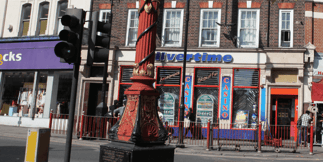
Merkur Slots under scrutiny from MP's. (Image: Nick Barton/Alamy)
A bonus scheme at Merkur Slots, linking staff rewards to “controllable profit” derived in part from slot machine takings, has provoked sharp criticism from MPs and gambling reform campaigners. The controversy reignites urgent questions about how financial incentives align, or conflict, with responsibilities to protect vulnerable gamblers.
Rising Scrutiny of Merkur’s Incentives
Merkur Slots, a UK arm of the German Gauselmann Group, operates more than 200 adult gaming centres (AGCs). The Guardian recently revealed that some Merkur venue managers are eligible for bonuses worth up to 80% of their base salary, with the majority tied to “controllable profit”, a metric that includes net revenues from slot machines.
Given the size of the bonus, critics argue that staff may have a financial disincentive to interrupt play or intervene when customers show signs of harm. One internal document reportedly lists “net revenues”, effectively takings from slot games, as the first factor in the controllable profit calculation.
In response, Merkur insists that the scheme is compatible with safer gambling goals. Its lawyers note that roughly 20% of salary is at risk if venues fail to meet performance targets linked to compliance, audits, and safer gambling training. The firm says it “strongly rejects” any notion that incentives discourage staff from intervening.
Parliamentary Outrage and Moral Hazard Concerns
Across party lines, MPs have condemned the bonus scheme as inherently flawed. Iain Duncan Smith, a former Conservative leader now focused on gambling reform, acknowledged Merkur’s inclusion of safer gambling measures but stated the incentive structure looked like “an incentive not to intervene.”
Labour MP Dawn Butler said the bonus structure seems to “completely contradict” Merkur’s public commitments to social responsibility and called for an immediate reform.
Labour MP Alex Ballinger went further, describing the scheme as reflecting
“a complete lack of responsibility and the urgent need for greater regulation.”
Among concerns is a “moral hazard”: staff rewarded when customers lose may be less vigilant in identifying harm. MPs argue the bonus scheme could discourage staff from interrupting play or flagging signs of problem gambling.
A Backdrop of Prior Regulatory Breaches
Merkur has already faced regulatory penalties in Britain. In February 2025, the Gambling Commission fined Merkur Slots UK £95,450 following a case in which a customer lost nearly £1,981 across multiple sessions in a Stockport venue. Investigators found that staff failed to engage with the gambler or assess harm across extended periods of play, breaches of the Commission’s Licence Conditions and Codes of Practice (LCCP).
The Commission described the case as “clear cut,” stating Merkur had policies and procedures in place but staff did not effectively execute them. Merkur says it cooperated fully and has since introduced remedial changes.
This episode adds weight to concerns about aligning profit measures with harm prevention obligations.
Merkur Expansion and 24/7 Operations
Merkur is actively expanding in the UK high street: new venues are being planned in Hastings and Swansea, part of what the article frames as a “UK‐wide boom.”
AGCs are located disproportionately in economically deprived areas, where residents may be more vulnerable to gambling harm. Slot machines are also widely regarded as among the more addictive forms of gambling due to their fast play cycles.
A Merkur Slots branch in Coventry was granted permission to operate 24 hours a day, even amid objections. Local authorities accepted that there was “no evidence” the move would meaningfully raise crime, anti social behaviour, or noise issues, contingent on management meeting required conditions.
In Northampton, Merkur proposed converting a vacant town centre shop into an adult gaming centre (AGC). The proposal avoided fixed odds betting terminals (FOBTs), focusing instead on slot machines and bingo tablets.
A separate plan surfaced for Daventry, where Merkur planned a two story venue inside a shopping plaza, converting vacant retail units back into active high street use.
These moves suggest Merkur is pushing deeper into retail footprint growth and flexibility of hours, not just optimising existing assets.
If staff remuneration encourages passive behaviour during harmful play, consumer protections risk being undermined from within. Critics warn that such bonus models could distort staff motivations, especially when bonuses rival or exceed base pay.
For MPs and campaigners, the scheme illustrates how weak regulatory guardrails leave room for business models that may prioritise revenue over safety. They argue that without clarity and tighter rules, industry incentives will continue to clash with consumer protection.
Meet The Author
Experience

 News Writer
Most of my career was spent in teaching including at one of the UK’s top private schools. I left London in 2000 and set up home in Wales raising four beautiful children. I enrolled at University where I studied Photography and film and gained a Degree and subsequently a Masters Degree. In 2014 I helped launch a new local newspaper and managed to get front and back page as well as 6 filler pages on a weekly basis. I saw that journalism was changing and was a pioneer of hyperlocal news in Wales. In 2017 I started one of the first 24/7 free independent news sites for Wales. Having taken that to a successful business model I was keen for a new challenge. Joining the company is exciting for me especially as it is a new role in Europe. I am keen to establish myself and help others to do the same.
Read Full BioRelated News






Test Your Luck
Not Your Spam Filter
Sign up to receive emails and promotions from Casinos.com