Research Tool Will Show How Different Countries Regulate Gambling. (Image: Paul Melling/Alamy)
After months of intensive research, coding, and rigorous debate, a new benchmark for gambling regulation has been launched: the Global Gambling Control Scorecard (GGCS). Developed by Gambling Research Glasgow (GRG) at University of Glasgow with support from World Health Organization (WHO) and international partners, the tool is designed to help researchers, regulators, and civil-society actors assess how effectively different countries regulate gambling and protect people from related harms. 
GGCS covers 34 European jurisdictions and brings together over 40 indicators covering not only traditional regulatory mechanisms, licencing, legal status, illegal-gambling prevention, but also policies aimed at harm prevention, cross-sector collaboration (including mental health and financial education), harm-monitoring systems, and funding for prevention and treatment. 
The full dataset and codebook are now publicly available, giving stakeholders the opportunity to benchmark national regulatory frameworks, identify gaps, and push for reform. A more user-friendly, searchable online version will soon be published on the Gambling Research Glasgow website.
University Celebrates Success of GGCS
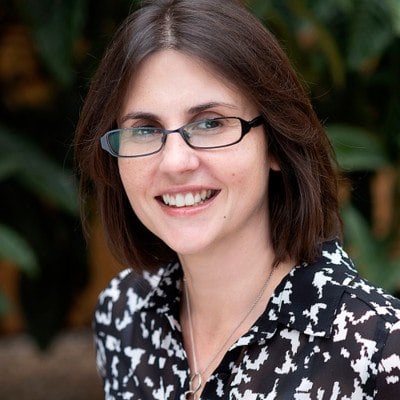
Professor Heather Wardle. (Image: H Wardle/Linkedin)
Heather Wardle, Professor of Gambling Research and Policy at the University of Glasgow said: "The Global Gambling Control Scorecard, which compares regulatory policies for gambling across Europe, is a vital tool for anyone interested in how gambling is regulated globally, and learning about what is happening in other countries (plus you can benchmark how your country compares to others, (who doesn't like a bit of international cross-comparison)."
"Congratulations to Daria and team for getting this ready, I'm excited to see how this data is used by others: let us know what you think of it and how you use it."

Dr Daria Ukhova. (Image: D Ukhova/Linkedin)
Daria Ukhova, Ph.D. Research associate at the Lancet Public Health Commission on Gambling said:
"Huge thanks to everyone who has been part of this project, funded through the University of Glasgow’s UKRI Impact Acceleration Account multidisciplinary fund and supported by the World Health Organization and our wonderful partners."
"A special thanks also goes to the amazing team who dedicated their time to the challenge of data coding and triangulation for GGCS."
"I hope the dataset proves useful for researchers, regulators, and civil society actors around the world working to prevent gambling harms."
First Shared International Framework for Gambling Regulations
There has never been a shared, international framework for comparing how different countries regulate gambling. GGCS aims to fill exactly that gap. 
Historically, regulatory efforts have gravitated toward encouraging “responsible gambling,” placing the burden on individuals. But critics argue that this overlooks systemic issues: product design, marketing, accessibility, and industry practices that significantly amplify risk. A previous global review led by GRG and collaborators found that even when harms are acknowledged in legislation, action often remains narrowly focused on individuals rather than structural safeguards. 
GGCS brings nuance back into the picture. By evaluating dimensions such as regulatory powers, enforcement, multisectoral prevention policies, and harm-monitoring, the scorecard enables a richer understanding of where countries excel, and where regulation remains patchy or outdated.
How the Scorecard was Built
The GGCS was developed through a collaborative, expert-driven process. Central to this was a global e-Delphi study involving regulators, policymakers, researchers, clinicians, and civil-society representatives from across high- and low/middle-income countries. This ensured the framework reflects the complexity and variety of regulatory approaches globally. 
The choice of indicators drew on evidence reviews, including research published by GRG in collaboration with other institutions, about which policies are most likely to prevent gambling harms.  The scorecard’s seven key dimensions include: legal and regulatory regime; measures to prevent illegal/unlicensed gambling; harm prevention policies and multisectoral collaborations; prevention and treatment availability; effectiveness of regulatory controls; harm-monitoring systems; and funding for prevention and treatment. 
Importantly, the project team discloses that no co-author has received direct or indirect funding from the gambling industry in the past five years, the funding comes via UK Research and Innovation (UKRI) through an Impact Acceleration Account. 
A Powerful Tool and Online Version Imminent
For researchers, advocates, and policymakers, GGCS offers a powerful tool: a shared language and framework to compare jurisdictional regulation, highlight best practices, and identify gaps. For civil-society organisations, it can support evidence-based advocacy. For regulators and governments, the scorecard can serve as a roadmap for reform, a chance to revisit long-standing assumptions, push for systemic regulation of industry practices, and move beyond individual-focused “responsible gambling” strategies. 
Looking ahead, GGCS will evolve. Although the current release covers European jurisdictions, the structure allows expansion to other regions. The forthcoming online, searchable version will make it far easier for non-specialist users to explore, compare, and draw lessons.
Meet The Author
Experience

 News Writer
Most of my career was spent in teaching including at one of the UK’s top private schools. I left London in 2000 and set up home in Wales raising four beautiful children. I enrolled at University where I studied Photography and film and gained a Degree and subsequently a Masters Degree. In 2014 I helped launch a new local newspaper and managed to get front and back page as well as 6 filler pages on a weekly basis. I saw that journalism was changing and was a pioneer of hyperlocal news in Wales. In 2017 I started one of the first 24/7 free independent news sites for Wales. Having taken that to a successful business model I was keen for a new challenge. Joining the company is exciting for me especially as it is a new role in Europe. I am keen to establish myself and help others to do the same.
Read Full BioRelated News









Test Your Luck
Not Your Spam Filter
Sign up to receive emails and promotions from Casinos.com