Minnesota Supreme Court Backs Running Aces in ‘Dealer Assist’ Table Games Case


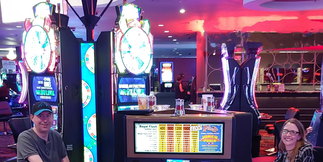
Dealer assist table games at Running Aces allow players to wager electronically while a live dealer runs the game at a traditional gaming table. (Photo: Running Aces Hotel, Casino & Racetrack / YouTube)
The Minnesota Supreme Court issued a ruling in favor of the Running Aces Hotel, Casino & Racetrack this week, saying that the racino was within its rights to offer “dealer-assist” table games at the facility.
The case began when the Shakopee Mdewakanton Sioux Community (SMSC) challenged a Minnesota Racing Commission decision that approved a plan to bring another dealer assist table to its card room in 2023.
Tribe Argued Games Infringed on Compact
The Minnesota Racing Commission (MRC) had initially approved dealer assist at Running Aces games in 2017. But when the MRC approved the new floor plan, that’s when SMSC appealed the case in the Minnesota Court of Appeals.
The Court of Appeals upheld the MRC decision, after which SMSC appealed the case to the Minnesota Supreme Court.
At issue is the dealer-assist format. In these games, a live dealer draws cards from a shuffled deck. Players, who can be seated at dozens of different stations, can watch the action over video. The format allows dozens of players to participate in a single game simultaneously and place bets using interactive touch screens.
SMSC argued that the dealer-assist games qualify as “video games of chance.” Such games are exclusively limited to tribal groups that have signed compacts with the Minnesota state government.
Attorneys for Running Aces countered that SMSC is a competitor to Running Aces, which makes it lack legal standing just because it might lose gaming revenue from the new games. The court rejected that argument, noting that the tribe can challenge a decision related to the exclusive gaming activities that Native American tribes have access to under the state gaming compact.
However, the Supreme Court was split on whether the claim that dealer assist platforms represented “video games of chance” and thus violated that compact. In the end, the justices were split 3-3 on the merits of the case, which allowed the lower court’s decision remained in place.
Running Aces, SMSC Have History of Litigation
Like the justices, the two sides were predictably split in their reactions to the decision.
“This is an important part of the card room for Running Aces,” said attorney Evan Nelson, who represented the racino. “This is innovative technology that allows for maybe a different generation of people who want to play card games to interact with the games.”
SMSC maintained its opposition in a statement, saying it believes the games remain “a clear violation of Minnesota law.”
The case continues a long history of friction between racetracks and tribal nations in the state of Minnesota.
In April 2024, Running Aces filed a lawsuit accusing some tribal casinos of offering card games that are not authorized under Minnesota’s gaming compacts, including Three Card Poker and Ultimate Texas Hold’em. SMSC said the lawsuit had “no merit” and was “a desperate stunt to attack the good reputation of tribes and tribal gaming.”
In March 2025, that lawsuit was dismissed in federal court. Running Aces attempted to revive the lawsuit later that year, but a Minnesota federal judge denied a motion to amend its complaint in August 2025.
Meet The Author
Experience

Ed Scimia is an experienced writer who has been covering the gaming industry since 2008. He graduated from Syracuse University in 2003 with degrees in Magazine Journalism and Political Science. As a writer, Ed has worked for About.com, Gambling.com, and Covers.com, among other sites. He has also authored multiple books and enjoys curling competitively, which has led to him creating curling-related content for his YouTube channel, "Chess on Ice."
Read Full BioRelated News
![[Video] Elon Musk’s Boring Company Drilling Las Vegas Tunnel Network Under Westgate Casino](https://www.casinos.com/cdn-cgi/image/f=webp,q=86,fit=cover,g=auto,w=323,h=162/https://objects.kaxmedia.com/auto/o/192479/97eb340d1f.jpeg?v=70fa21fd123d0abbd6c544fe6094f9e093fc4b50)






Test Your Luck
Not Your Spam Filter
Sign up to receive emails and promotions from Casinos.com