Weddings, Wagers and Wooing: Why Valentine’s Day Is for Gamblers


In Las Vegas, Valentine's Day is a high-stakes affair, where even weddings can be part of the gamble. (Image: stockbroker/Alamy)
Valentine’s Day might look like a sure bet for flowers, fancy dinners, and filtered photos. But scratch the surface, and you’ll find something far more unpredictable. At its core, love has always been a gamble, a fact that shows up in centuries of folklore and global customs.
Even today, swiping on a dating app or showing up to a mass wedding in Vegas reflects the same thrill of taking a risk, placing your bet, and hoping for the jackpot.
Love Is a Gamble: Then and Now
Long before red roses and pink candy hearts filled shop windows, mid-February was already tied to risk and reward.
In ancient Rome, the festival of Lupercalia was held around February 15. It featured animal sacrifices and rituals thought to purify the city and boost fertility. Priests called Luperci would run through the streets, slapping women with strips of goatskin to promote conception. While some historians argue there's no direct link between Lupercalia and Valentine's Day, the shared themes of fertility and pairing lingered.
By the Middle Ages, Saint Valentine’s Day had been rebranded as a Christian feast day, and writers like Geoffrey Chaucer began linking it with courtship. Still, many of the customs that followed kept the risk-and-reward ethos alive.

Birds, Bay Leaves and Betting on Fate
In the British Isles, Valentine’s Day folklore made romantic futures feel like a guessing game. According to tradition, the first bird a woman saw on the morning of February 14 would hint at her future partner's character. A goldfinch meant wealth. A robin meant a sailor. A sparrow? A simple but devoted spouse.
In some regions, girls would pin bay leaves to their pillows or run to church at midnight in hopes of dreaming about or glimpsing their future love.
Meanwhile in Norfolk, an anonymous gift-giver named "Jack Valentine" would leave trinkets at the door, acting as a kind of proto-secret admirer. Each of these customs captured the uncertainty and excitement of matchmaking, a feeling modern dating hasn't exactly escaped.
Playing for Keeps: Love Traditions Around the World
Across cultures, Valentine’s Day and its equivalents are shaped by local attitudes, but the element of chance is a constant.
In Japan, Valentine’s Day is split by gender. Women gift chocolates on February 14, ranging from honmei-choco (romantic) to giri-choco (obligatory). Men return the gesture on White Day, a month later. South Korea adds a third round with Black Day on April 14, when singles eat black bean noodles in solidarity.
Finland swaps romance for platonic connection. Known as Ystävänpäivä (Friend’s Day), February 14 is about cherishing friends and family with cards and small gifts.
In Denmark, the game ramps up. Danes exchange gækkebrev, cut-paper letters with anonymous rhymes. If the recipient correctly guesses the sender, they win an Easter egg. If not, they owe one. It’s love with a twist of strategy.
And in Brazil, Valentine’s Day lands on June 12, the eve of Saint Anthony’s Day, patron saint of marriage. Celebrations include parties and matchmaking rituals in warmer weather, far from the February frost.
Weddings by the Dozen, Vegas Style
Nowhere does love-as-a-game play out louder than in Las Vegas. Every year, thousands head to the self-declared wedding capital of the world to roll the dice on romance. From drive-through vows to Elvis impersonators, Vegas ceremonies are fast, flashy and full of risk. And for some, that’s the entire point.
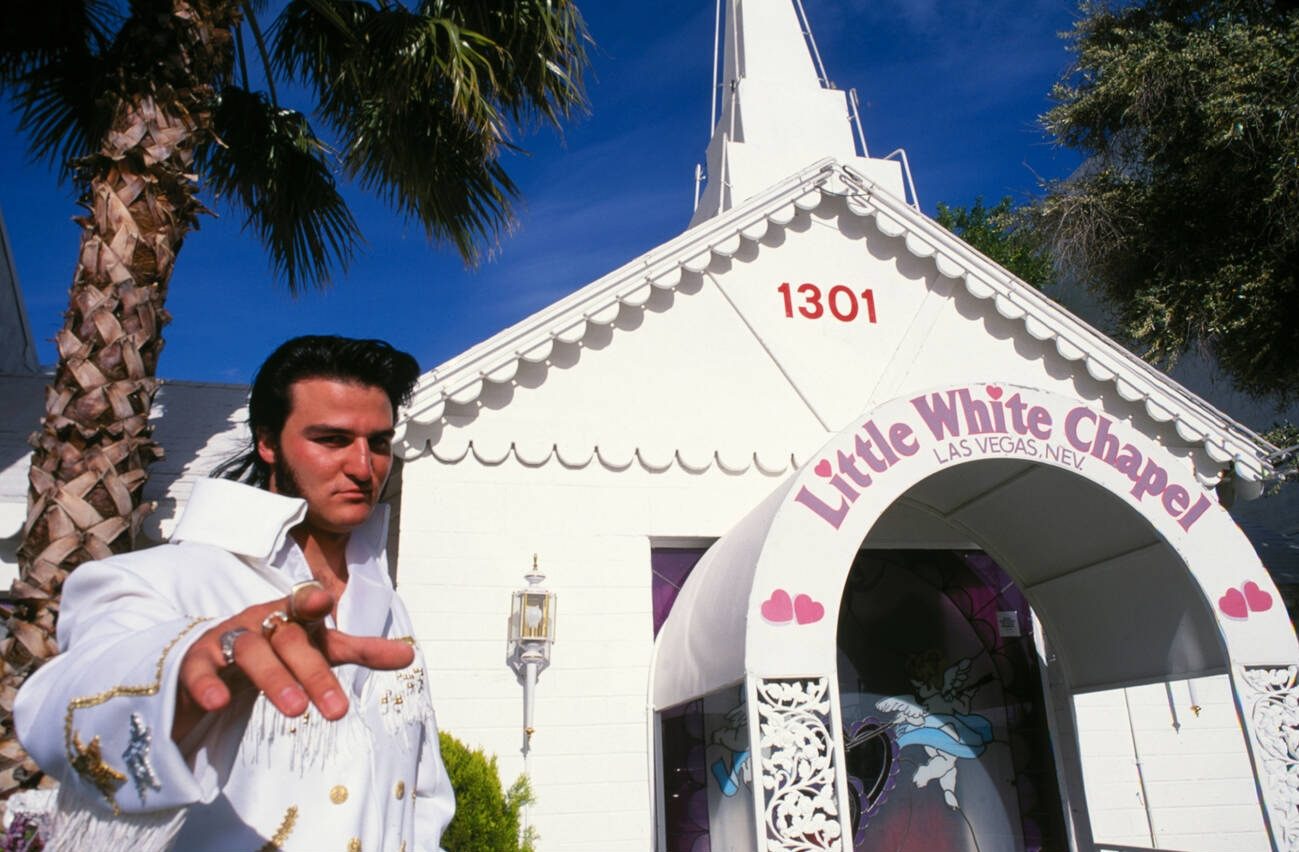
The King (impersonator) officiating at Vegas weddings. (Image: Chris Cheadle/Alamy)
With a marriage license costing less than $100 and no waiting period, couples can get hitched faster than you can say "double down."
To celebrate love, and all the unpredictability it brings, Casinos.com is giving one lucky couple a chance to tie the knot in true Las Vegas fashion.
Whether it’s your first spin or your final bet, this Valentine’s Day, why not go all in?
Meet The Author
Experience

 News Writer
Most of my career was spent in teaching including at one of the UK’s top private schools. I left London in 2000 and set up home in Wales raising four beautiful children. I enrolled at University where I studied Photography and film and gained a Degree and subsequently a Masters Degree. In 2014 I helped launch a new local newspaper and managed to get front and back page as well as 6 filler pages on a weekly basis. I saw that journalism was changing and was a pioneer of hyperlocal news in Wales. In 2017 I started one of the first 24/7 free independent news sites for Wales. Having taken that to a successful business model I was keen for a new challenge. Joining the company is exciting for me especially as it is a new role in Europe. I am keen to establish myself and help others to do the same.
Read Full BioTest Your Luck
Not Your Spam Filter
Sign up to receive emails and promotions from Casinos.com