Denmark Pioneers Landmark Law: Full Copyright Over Personal Likeness


Members of the '501st Legion Ireland Garrison' dressed as Darth Vader and Obi Wan during the May the 4th Festival in Portmagee, where scenes from Star Wars were filmed. (Image: PA Images)
In a first for Europe, Denmark has passed a landmark law granting individuals full copyright over their own face, voice, and body, an aggressive move to protect citizens from unauthorised use in AI-generated content, such as deepfakes, political spoofs, or adult material. The law gives people three core rights: to demand takedowns of AI content using their likeness, seek compensation for harm, and hold platforms accountable for hosting such content.
For gambling and entertainment industries in the UK, Denmark’s law could preview a new compliance standard where likeness rights are enforceable not just for data protection, but as property. Combined with the Midjourney case, it signals a global shift: AI companies and platforms may soon be required to embed copyright respect and personal consent into the foundation of their products, not just as patches after the fact.
The outcome could define not just who owns creative content in the age of AI, but who’s responsible when that ownership is violated.
In an age of cloning, copying and faking, Denmark says: “You are your own intellectual property.
Unauthorised use of Darth Vader Provokes Major Legal Battle Between Disney, NBCUniversal and Midjourney
This legal framework mirrors concerns being raised in major U.S. litigation, particularly a high-profile case involving Disney and NBCUniversal vs. AI image generator Midjourney. Filed on 11 June 2025, the lawsuit alleges Midjourney enabled users to create unauthorised images of characters like Darth Vader and Elsa without permission, despite having tools to filter and block such outputs. The studios argue that AI compliance can no longer be optional or reactive; it must be foundational.
Legal experts note that the Midjourney case isn’t an attack on AI itself, but a demand for infrastructure that supports creative rights at scale.
“This case could shift copyright safeguards from being feature toggles to mandatory design pillars,” said one copyright analyst.
The Motion Picture Association has echoed this, stating that while U.S. copyright law remains strong, enforcement tools haven’t kept pace with generative AI’s scale. That gap, between what’s allowed and what’s possible, is where lawsuits, and now legislative moves like Denmark’s, are stepping in.
Stricter Content Controls for Ads and Affiliates
Gambling operators and affiliates often use stock images or influencer-style promotions to attract users. If the people in those visuals didn’t explicitly consent to their likeness being used, especially for AI-generated or manipulated media, it could lead to legal action under a UK version of the Danish law.
• Impact: Brands and affiliates would need to secure ironclad, documented consent for all image and voice use, including any AI-created promotional content.
• Result: Higher production costs and tighter vetting of third-party marketing materials.
“A photograph of someone contains personal data… a deepfake of someone which identifies them contains that person’s personal data. Under the UK GDPR, personal data used to create deepfakes is likely to constitute a use of personal data that an individual has not consented to.” Dr. Michael Veale, Associate Professor of Digital Rights at UCL.
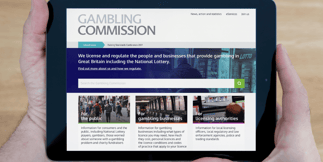
A spokesperson for the Gambling Commission said: "We wouldn’t offer comment on regulations in other jurisdictions.
"We encourage all operators to innovate to make gambling safer, fairer and crime-free. However, we expect such innovation to adhere to any legislation or regulations overseen by other bodies and be in line with their licence commitments.
The Gambling commission went on to say: "In April we published guidance to operators in relation to artificial intelligence being used to bypass customer due diligence - Emerging money laundering and terrorist financing risks from April 2025.
"Additionally, Licensees are bound by the CAP/BCAP advertising rules which are enforced by the ASA. You may find this CAP article helpful - AI, advertising, and the policy landscape – CAP proactive monitoring."
Influencer and Streamer Protections
Casino streamers, brand ambassadors, and public-facing figures in the gambling industry could be better protected from impersonation or AI cloning.
• Impact: Deepfake scams (e.g., fake endorsements or bonus code promotions) would carry stronger legal penalties.
• Result: Increased trust and security for influencer-driven marketing, which is big in crypto casinos and Twitch gambling.
Platform Liability and User-Generated Content
Operators hosting live dealer streams, community forums, or social casino features would become liable if AI-generated content using someone’s face or voice is uploaded or shared on their platform.
• Impact: More moderation costs and platform compliance requirements.
• Result: Smaller operators might struggle to implement effective monitoring, giving an edge to well-resourced platforms.
Player Protection and ID Theft
In cases where deepfakes are used to spoof identities for KYC (Know Your Customer) or bonus abuse, players would now have stronger rights to claim damages and get content removed.
• Impact: Regulatory pressure on operators to bolster biometric security and identity verification.
• Result: Enhanced data protection expectations could slow onboarding times or increase friction for new players.
Gambling Content Creation Could Get Riskier
If you use any AI-generated content showing people (e.g., in YouTube thumbnails, app store previews, or slot game animations), you may need to prove those likenesses were created without infringing on real individuals’ identity rights.
• Impact: Developers using generative AI tools for games or marketing might face new compliance burdens.
• Result: A pivot to using AI safely or reverting to in-house or fully licensed human assets.
UK Adoption of Law Could Mean Stricter Transparency
If adopted, such legislation in the UK would push the gambling industry toward stricter transparency, verified identity use, and proactive content moderation. While it may increase operational and legal costs, it could also foster safer, more ethical marketing and a clearer framework for consent and digital personhood.
Meet The Author
Experience

 News Writer
Most of my career was spent in teaching including at one of the UK’s top private schools. I left London in 2000 and set up home in Wales raising four beautiful children. I enrolled at University where I studied Photography and film and gained a Degree and subsequently a Masters Degree. In 2014 I helped launch a new local newspaper and managed to get front and back page as well as 6 filler pages on a weekly basis. I saw that journalism was changing and was a pioneer of hyperlocal news in Wales. In 2017 I started one of the first 24/7 free independent news sites for Wales. Having taken that to a successful business model I was keen for a new challenge. Joining the company is exciting for me especially as it is a new role in Europe. I am keen to establish myself and help others to do the same.
Read Full BioRelated News





Test Your Luck
Not Your Spam Filter
Sign up to receive emails and promotions from Casinos.com