Nadia Bubenikova on How Influencer-Led Mini-Games Are Rewriting Casino Marketing


Nadia Bubenikova is ideally situated to give us a fascinating insight into the world of influencers. The CBO and Co-Founder of Famesters, a global influencer marketing agency. Nadia has helped brands connect with audiences across esports, streaming, and online casinos, and she was this week’s guest on the casinos.com Podcast where she shared what works, what doesn’t, and where influencer marketing in gaming is headed next.
She began by telling casinos.com that working in casino marketing is less a job than a way of seeing the world. Trends flash by. Audiences shift. Timing makes or breaks an idea.
“You really have to be scanning all the platforms, all the trends,” she says. “Once you miss it, then the trend is just gone.”
Her message lands as the industry’s centre of gravity tilts toward creator content and gamified promotion. The so-what: interactive streams are turning viewers into participants, tightening the path from ad to action, and forcing brands to rethink compliance, measurement, and who they back on camera now that regulation is tightening in key markets.
Always-On Creativity, Grounded in Numbers
Nadia casts modern casino marketing as equal parts creative sprint and data discipline. “It’s a perfect combination of being creative and being an artist along with being… someone who really thinks about numbers all the time,” she says. Ideas are useless if they don’t deliver performance.
That “always on” mindset is shared across her agency’s team leads. Everyday sparks, a conversation on a bus, a visual gag on a stream, go into a mental “creativity box” to be unpacked when a campaign needs a fresh mechanic. The organising principle is speed and fit: if a concept takes longer than 10 to 20 seconds to explain, it’s probably the wrong tool for a fast-moving stream environment.
Listen to the full interview on our Podcast
From Passive Viewing to Play: The Rise of Stream Mini-Games
Speaking at iGB in London earlier this year, Nadia argued the old “watch and forget” model is aging out. “Live streams start becoming these like almost mini games… creator versus creator leaderboards… community missions,” she says. The stream itself becomes the funnel, and the “audience that watches the ad is becoming the player and not just a passive viewer.”
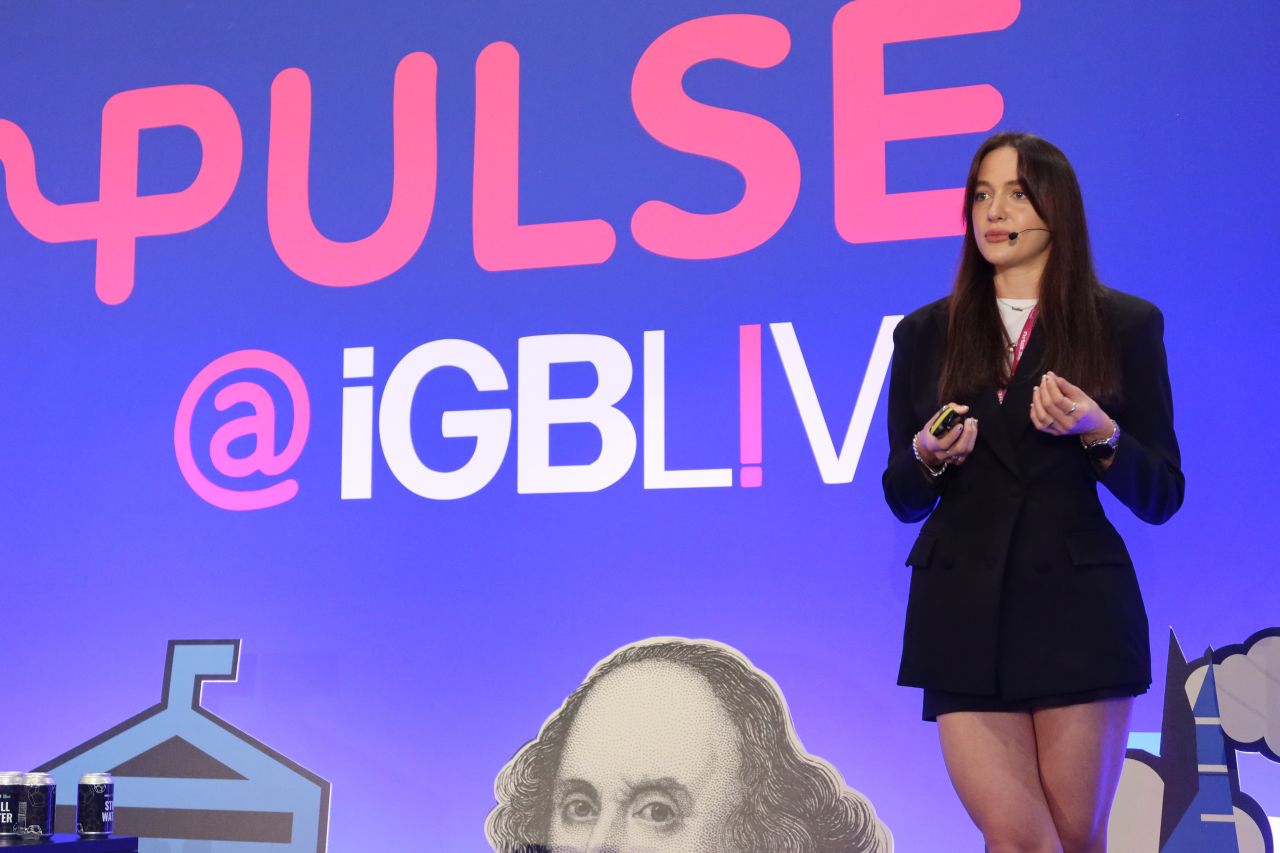
Why it matters: interactive, time-boxed challenges and public leaderboards create urgency and social proof, two signals that lift conversion in a format where attention is scarce. Independent industry reporting echoes the shift toward interactive, real-time brand activations across live platforms, with marketers leaning on measurable engagement inside the stream.
What Works, And What Doesn’t, For iGaming Gamification
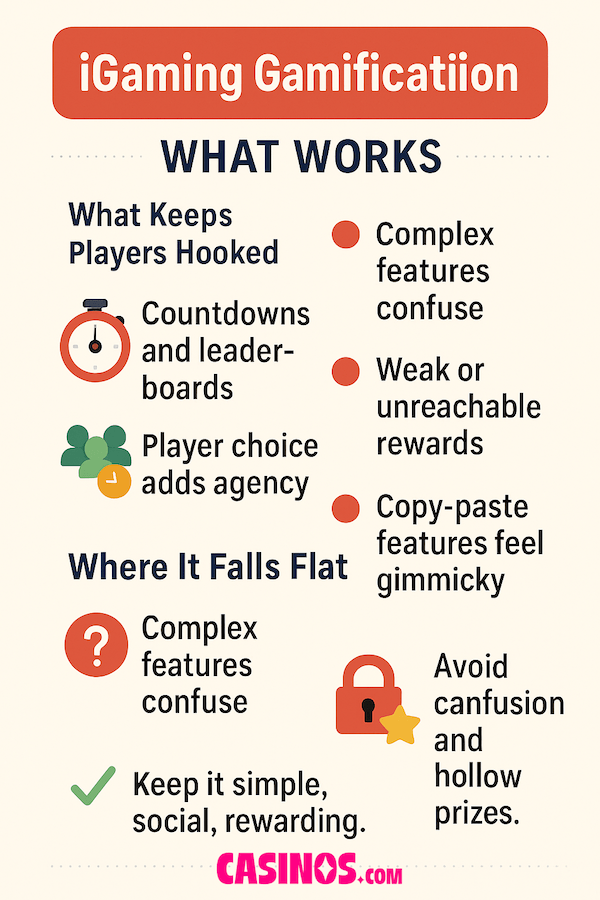
For casino brands, gamification maps neatly onto audience motivations around play, risk, and reward. Nadia’s quick-hit list of mechanics that perform:
• Countdowns and public rankings that show progress in real time.
• Community goals and time-limited bonuses that reward collective action.
• Audience-chosen forfeits or rule tweaks that let viewers steer the challenge.
“Gamification is fun as long as it’s not too complicated,” she adds. “If it takes longer than 20 or even 10 seconds to explain, drop it.”
Matching Mechanics to Demographics
Nadia sees gamified formats resonating most with Gen Z and millennials, but not exclusively. High-intent bettors respond to mission-based bonuses, while more mature viewers may be easier to reach on YouTube than Twitch. The practical takeaway: tailor mechanics and channels to where each cohort actually spends time, then measure, iterate, and avoid over-engineering rules that create friction.
Influencers: Authenticity Over Raw Reach
“What’s the most single important factor?” Nadia doesn’t hesitate: credibility, demonstrated in how a streamer plays, how they show wins and losses, and how the audience reacts. “We never look at just the numbers,” she says. In one case study she cites, a creator called LeonBad, letting the streamer set playful rules around an authentic style “result[ed] in double the CRs at some stages.”
Her caution: some creators “will be trying to create and fake the numbers,” so brands need to analyse what sits behind a performance dashboard, not just what sits on it. Long-term deals help separate signal from noise; five to ten streams is the range where a partner’s real potential tends to show.
Budgets, Mid-Tier Talent, and Building Momentum
Superstar creators are expensive and scarce. Nadia’s advice for smaller brands is to “start light” with mid-tier or several smaller streamers, tie them into shared leaderboards, and run weekly challenge cycles. That lets teams test mechanics, build operational muscle, and find breakout partners without burning budget on a single bet.
“As with anything… some of them will give you bad performance but some of them will give you good performance,” she says.
The portfolio logic, winners make up for duds, applies just as much to creators as to games.
Compliance Tightens: India and Platform Rules

Regulation is the other force reshaping the market. Nadia points to India, where new legislation this summer sharply curtailed real-money online gaming and tightened scrutiny on promotion, the kind of change that spooks creators and brands alike. Independent reports confirm Parliament passed a sweeping bill in August 2025 to ban online gambling and criminalise promotion and financing, intensifying pressure on influencers and platforms.
Platforms are also narrowing lanes. YouTube rolled out stricter rules in March 2025 around gambling mentions, logos, and links, particularly for services outside its approved list. Twitch, which limited certain gambling streams in 2022 and continues to refine enforcement, allows categories like poker and sports betting under licensing conditions, but scrutiny remains high.
Nadia’s prescription is “radical transparency”: tell creators the real risks, insist on clear disclosures, and “show the real data on stream” where feasible, streaming affiliate dashboards or weekly standings to prove authenticity and protect both brand and talent.
Why Long-Term Partnerships Win
“100% long-term always wins,” Nadia says. One-off streams rarely give audiences time to try a new brand, especially when a creator’s regular partners return the next day. The operational brief: sign multi-stream deals, co-design simple, repeatable mechanics, and keep fraud analytics close before invoices go out.
On ROI, Nadia says top creators already hit “over $20 for every pound a dollar spent” even in classic formats. Gamified arcs that drive repeat participation should lift LTV further. Industry benchmarks vary widely and depend on niche and compliance, but her core point holds: ceiling comes from campaign design and creator fit rather than from the mechanic alone.
What’s Next: Creator Leagues, Bigger Seasons, And Fraud Controls
Looking ahead, Nadia expects “something major… like a creator league” with season passes and multiple brands. She says her team is working on a large-scale version for early 2026. The opportunity is obvious, persistent seasons keep communities engaged, but so is the risk: fraud traffic is a known problem in iGaming promotions. Her non-negotiable is alignment with fraud analytics before payouts and across every stream cycle.
Meet The Author
Experience

 News Writer
Most of my career was spent in teaching including at one of the UK’s top private schools. I left London in 2000 and set up home in Wales raising four beautiful children. I enrolled at University where I studied Photography and film and gained a Degree and subsequently a Masters Degree. In 2014 I helped launch a new local newspaper and managed to get front and back page as well as 6 filler pages on a weekly basis. I saw that journalism was changing and was a pioneer of hyperlocal news in Wales. In 2017 I started one of the first 24/7 free independent news sites for Wales. Having taken that to a successful business model I was keen for a new challenge. Joining the company is exciting for me especially as it is a new role in Europe. I am keen to establish myself and help others to do the same.
Read Full BioRelated News





Test Your Luck
Not Your Spam Filter
Sign up to receive emails and promotions from Casinos.com