Spoiler Alert: In 1993, Hulk Hogan came to Las Vegas and saved the day. He also made a veteran boxing writer play a different role than expected. (Image: courtesy of WWE)
WrestleMania 41 is set to fill Allegiant Stadium, the home of the NFL’s Las Vegas Raiders, for two nights of action on Saturday and Sunday. Associated WWE activity will spill over to T-Mobile Arena and Fontainebleau Las Vegas, and outsiders piggybacking the action will cover large swaths of the Las Vegas Strip, downtown Las Vegas and beyond.
Everything surrounding the event feels massive, well-polished and mainstream. And it’s about as far a cry from the only other time across four decades of WrestleManias in which the WWE’s signature annual event took place in Las Vegas.
In April 1993, outside of Caesars Palace, in an area now occupied by the resort’s convention center, pools, and Octavious Tower, WrestleMania IX brought the stars of the then-WWF into the desert for a version of its annual supershow unlike anything that came before it. In a pop-up outdoor arena, the made-for-pay-per-view spectacle came with commentators and announcers in togas, elephants and other live animals ushered in by trumpeteers, and general pomp-and-circumstance taken to the extreme.
Veteran combat sports journalist Kevin Ione had a front row seat at Caesars Palace in 1993, and he recently spoke with Casinos.com about the event that would change the way many fans perceived professional wrestling.
Wrestling Arrives in Las Vegas

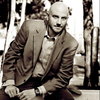
Kevin Ione (via Instagram)
The first WrestleMania emanated from Madison Square Garden in New York in 1985, and then famously scaled up to Detroit’s Pontiac Superdome with 78,000 fans in attendance for WrestleMania III. Two additional WrestleMania stadium shows followed in ensuing years -- WrestleMania VI at Toronto’s SkyDome, and WrestleMania VIII at Indianapolis’ Hoosier Dome.
But after bouncing back and forth between medium-sized arenas and big stadium shows, the WWF was intent on producing something completely different for 1993 -- an outdoor show at Caesars Palace. Previously the site of major boxing fights and an Evel Knievel stunt gone horribly wrong, Caesars essentially repurposed what was then a largely empty parking lot on its property.
Neither Las Vegas nor the wrestling promoters really knew what to expect, beyond the acknowledgement that it would be a spectacle.
Iole, a longtime combat sports reporter and member of the Nevada Boxing Hall of Fame, was working for the Las Vegas Review-Journal at the time, and as he tells it, sort of stumbled into his role as a ringside WrestleMania reporter.
“We were talking about who should cover this,” Iole recalled. “We're all sitting in a meeting and nobody really wanted to cover it. I said, ‘Hey, I'll do it.’ It's something different. It's fun. I got the assignment basically because I raised my hand.”
When Pro Wrestling Was Reality TV
Back in the early 1990s, professional wrestlers were still heavily committed to maintaining kayfabe, the perception that everything that went on in the ring and on the weekly shows was completely real.

That presented a unique challenge for Iole, whose experience came covering the highly regulated world of boxing in Nevada, which left him unsure where to draw certain lines about the reality of professional wrestling.
“I had to sit there and think, ‘Okay, how do I write this? That was before kayfabe was broken. I'm thinking I could write a business story -- they had this kind of economic impact, and all that. Then I thought, you know, why not go in character and do it from that standpoint?”
Iole thought that approach -- treating a plausibly scripted event with all the seriousness of a vigilant sports newshound -- could be funny while providing a unique hook. He said it was his attempt to connect with people in the wrestling world and fans who wouldn't really care about a typical business story. “So that was the approach I took,” Iole said.
Iole wasn’t intimately attuned to the ongoing storylines of the WWF in 1993, but he was a big wrestling fan in his younger years. Growing up in Pittsburgh, he was acutely aware of how wrestling worked and decided to throw himself headfirst into this WrestleMania assignment.
Not-So-Scripted Storylines
That approach served him well in the aftermath of the WrestleMania IX main event, when Iole accidentally inserted himself deeper into the scripted storyline than he expected.

After Bret Hart (“The Hitman”) lost his WWF title to Yokozuna -- courtesy of some salt to the eyes from Yokozuna’s valet Mr. Fuji -- Hulk Hogan made a surprise entrance and immediately challenged the new champion to an impromptu match. Yokozuna accepted, and some 22 seconds later, Hogan reclaimed the title -- and, before 16,891 in attendance at Caesars and 430,000 purchases of the PPV, chaos ensued.
“What shaped my coverage post-fight was the way Yokozuna wins the title,” Iole said. “And then he says ‘I'll fight anybody at any time,’ and Hulk runs out. So I'm thinking, how do I work this into my story?”
Iole said he guessed a little, but “kind of figured out their storyline” and assumed the role of an earnest sports reporter who believed everything he was seeing was real.
“So I asked Hulk Hogan, ‘Do you think [WWF President] Jack Tunney is going to do an investigation, because there was no contract signed. How can there be a fight with no contract signed?’”
Iole, who was primarily covering boxing at the time, was well aware of athletic commissions and approval processes that go into professional fights.
“I'm playing along with the game,” Iole said. “So I asked that question first, and don't remember the exact answer Hogan gave me, but he [avoided] it. Then later he was answering a different question from somebody else and said, ‘Who brought up Jack Tunney doing an investigation? Oh, yeah, you -- the troublemaker.’”
Return to 1993
Iole participated in the WWE’s “WrestleMania IX: Becoming a Spectacle” documentary, which was released on Peacock last Friday. Though he didn’t know until it aired whether or not he would be in the production, more than 30 years later the documentarians brought Iole right back to the moment when he briefly became a character in the ongoing WWF drama.

“I'm in the chair for maybe 90 minutes, and then they said we're going to take a break,” Iole said. “I'm shocked they're not done with me. I'm just a bit player in this whole thing. And so they take a break, and when they come back the guy hands me an iPad. I'm in the chair again, but now there's a camera behind me and a camera in front of me. It's a little bit different setup. [The filmmaker] found the Hulk Hogan thing, and they played it for me on the iPad. It was amazing.”
In the end, Iole’s anecdote didn’t make the Peacock documentary’s final cut. But it did provide a seasoned sports journalist a flashback to a time when professional wrestling, for him, suddenly got real.
Meet The Author
Experience

LAS VEGAS -- Tim is a longtime writer and editor with nearly two decades of experience in journalism and gaming. After starting his career at Newsday in New York, he moved into poker, where he covered the World Series of Poker, World Poker Tour and European Poker Tour for multiple outlets. He would go on to serve as a senior writer and then managing editor for Bluff Magazine, and then managing editor for the WPT. He also spent six-and-a-half years at ESPN, where he covered poker, sports betting, fantasy sports and combat sports. At ESPN, Tim was instrumental in launching the network's WWE vertical.
Read Full BioRelated News





Test Your Luck
Not Your Spam Filter
Sign up to receive emails and promotions from Casinos.com