Websites related to the fraud have been shut down. (Image: Europol)
The European takedown of a sophisticated SIM-box network could reshape how online casinos handle fraud, KYC, and player verification.
When Europol announced on 17 October that seven suspects had been arrested as part of “Operation SIMCARTEL,” it wasn’t just another cybercrime story, it was a wake-up call for industries built on trust and verification, including online casinos in the gambling industry. It was a huge breakthrough bust that did not make mainstream news in the U.K.
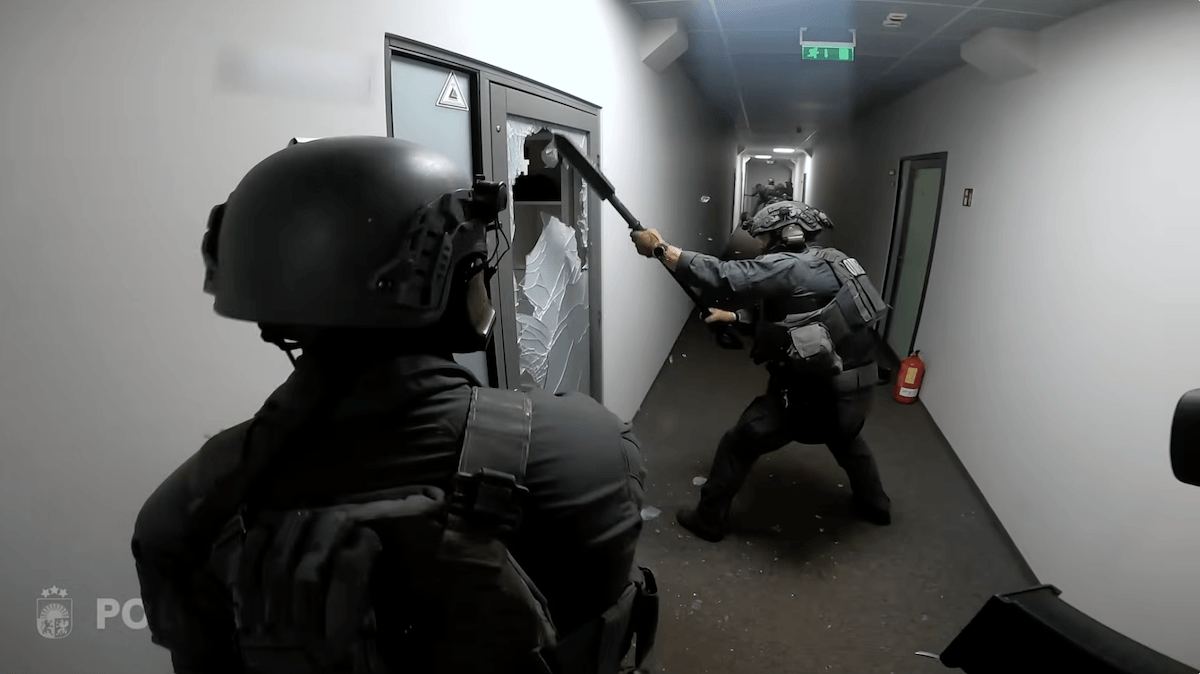
Europol officers breaking down doors. (Image: Europol)
A Global Takedown with Local Consequences
An international task force from Latvia, Austria, Estonia, and Finland, supported by Europol and Eurojust, dismantled what authorities described as one of the most complex SIM-box networks ever discovered. The criminal operation provided phone numbers from over 80 countries to mask users’ real identities, allowing them to commit fraud, extortion, phishing, and even money laundering.
According to Europol, “The criminal network and its infrastructure were technically highly sophisticated and enabled perpetrators around the world to use this SIM-box service to conduct a wide range of telecommunications-related cybercrimes, as well as other crimes.”
The coordinated raids, part of the EU’s EMPACT programme against organised crime, uncovered 1,200 SIM-box devices, 40,000 active SIM cards, and hundreds of thousands of additional cards. Investigators also seized five servers, froze €431,000 in bank accounts, confiscated about $333,000 in cryptocurrency, and seized four luxury vehicles.

A luxury car being seized. (Image: Europol)
The network’s reach was staggering. “Measured by volume, more than 49 million online accounts were created on the basis of the illegal service provided by suspects,”
Europol said. In Austria alone, more than 1,700 cyber-fraud cases were linked to the scheme, with losses exceeding €4.5 million, while Latvia recorded 1,500 victims and about €420,000 in losses.
Watch the Video of the Bust Here:
Inside the Operation
The criminals’ setup was a textbook example of cybercrime-as-a-service. They acquired thousands of SIM cards from nearly 80 countries, loading them into devices that allowed customers to rent local phone numbers anonymously. Two websites gogetsms.com and apisim.com, marketed the service as a legitimate SMS gateway before being seized by law enforcement and replaced with Europol “splash pages.”
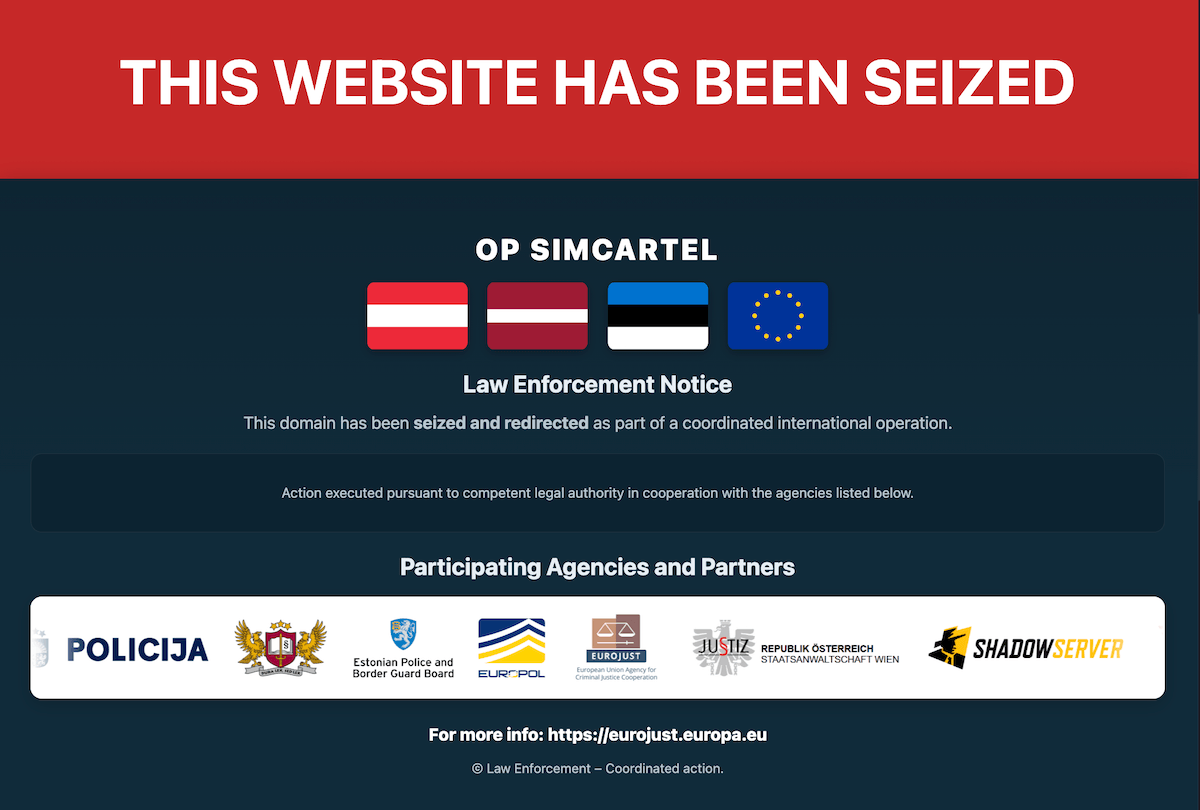
The websites have now been seized by Europol. (Image: Europol
The infrastructure let users generate or verify massive numbers of phone numbers to bypass identity checks or create fake accounts. Europol said the network’s offerings “enabled its clients to commit a multitude of serious crimes that would not have been possible at all without masking the perpetrators’ identities.”
Those crimes ranged from online marketplace scams and “daughter-son” WhatsApp cons to fake investment platforms, fraudulent e-shops, and impersonation of police officers. The SIM-farm setup, authorities said, also facilitated “phishing” and “smishing” campaigns, text and email schemes that trick victims into sharing sensitive information.
In short, this was a digital mask factory, and one that was doing brisk business.
Why Casinos Should Take Note of This News
For gambling operators, the lesson is clear: identity-based fraud is no longer confined to stolen credit cards or duplicate emails. SIM-box networks undermine every level of account verification, from Know Your Customer (KYC) checks to bonus eligibility systems.
By providing “clean” local phone numbers, these services enable criminals to:
• Open multiple accounts under false identities
• Circumvent geolocation restrictions
• Abuse sign-up bonuses and promotional offers
• Facilitate money laundering via small, seemingly legitimate transactions
This isn’t hypothetical. Investigators traced the network’s customers across multiple criminal sectors, and experts say online gambling is particularly exposed because it blends financial transactions with rapid account creation.
As one cybersecurity specialist told Casinos.com,
“These operations blur the line between legitimate traffic and fraud so effectively that, by the time a casino flags something suspicious, the bonus funds are long gone.”
The threat isn’t limited to financial loss. Under Europe’s strict AML and GDPR frameworks, operators that fail to detect these schemes could face regulatory penalties and reputational damage. The crackdown shows that fraudsters now operate at a level once reserved for state actors, industrialised, scalable, and nearly invisible.
What it Means for Players
For players, the effects of SIMCARTEL may not be immediately visible, but they’ll be felt in how casinos verify and process accounts. Expect more stringent KYC checks, longer verification times, and tighter controls around mobile authentication.
Players in high-risk regions may also see limits on the use of certain virtual numbers or temporary mobile services when signing up. The convenience of “quick-play” or one-click registration could be replaced by more layers of identity confirmation.
Bonus terms might change too. If fraud linked to fake accounts remains a threat, operators could reduce welcome offers, introduce lower maximum wins, or apply stricter wagering requirements to control abuse.
While these measures can feel like friction, they ultimately protect legitimate players by ensuring bonuses, payouts, and jackpots go to verified individuals, not networks of anonymous fraudsters.

Thousands of SIM cards discovered during raid. (Image: Europol)
The Bigger Picture
The Europol-led action demonstrates how cybercrime has evolved into an industrial service model, complete with marketing, customer support, and cross-border logistics. The “SIMCARTEL” network represents a glimpse into how criminal enterprises outsource fraud tools at scale.
For the gambling sector, the message is unmistakable: security must evolve just as fast. Casinos will need to integrate telecom verification, cross-reference device data, and share threat intelligence with both regulators and industry partners.
Europol called the operation “a joint investigative effort” with coordination from Austria, Estonia, Finland, Latvia, and Eurojust, emphasising that “the true scale of this network is still being uncovered.”
If the pattern holds, more copycat networks may exist, offering anonymity to anyone willing to pay. The casino industry, where real money moves instantly, remains an attractive target.
The best defence, as Europol’s action showed, is proactive collaboration between tech platforms, law enforcement, and private operators. The SIMCARTEL bust may have stopped one network, but it also exposed just how easily online services can be weaponised against themselves.
Meet The Author
Experience

 News Writer
Most of my career was spent in teaching including at one of the UK’s top private schools. I left London in 2000 and set up home in Wales raising four beautiful children. I enrolled at University where I studied Photography and film and gained a Degree and subsequently a Masters Degree. In 2014 I helped launch a new local newspaper and managed to get front and back page as well as 6 filler pages on a weekly basis. I saw that journalism was changing and was a pioneer of hyperlocal news in Wales. In 2017 I started one of the first 24/7 free independent news sites for Wales. Having taken that to a successful business model I was keen for a new challenge. Joining the company is exciting for me especially as it is a new role in Europe. I am keen to establish myself and help others to do the same.
Read Full BioRelated News







Test Your Luck
Not Your Spam Filter
Sign up to receive emails and promotions from Casinos.com