Hayden Bowman aims to reduce the risk in opening a casino. (Image: Hayden Bowman)
The VIP economy has long defined success in the iGaming space, where a handful of whales drive the lion's share of wagering volume. But for smaller or emerging casino operators, accessing that level of liquidity has traditionally meant raising vast sums, sacrificing control, or risking insolvency. Enter Bankroll-as-a-Service.
Just a year ago, Hayden Bowman was running outbound sales campaigns. Today, he's the founder of a model that is reshaping how new and existing operators manage financial exposure and compete at the top.
"About 12 months ago... my brother mentioned that there was an idea for a new model focusing on the bankroll and how operators compete," Bowman said.
"It was all new to me at the time. But he said, just have a talk with Pierre, my team lead, and see where it went. And 12 months on, here we are."
The Capital Gap
At the heart of the model is a basic but often overlooked truth: big wins require big reserves. Online slots can pay out tens of millions on a single spin. VIPs playing live casino may bet six figures on a single round. Traditional bankroll management advises operators to limit exposure to no more than 1% of capital per outcome but achieving that on VIP play requires deep pockets.
"You could go as far as to say it would be a prohibitive amount," Bowman said.
"Some operators use a rule of thumb whereby you never expose more than 1% of your bankroll to any particular outcome."
The current market is dominated by six to eight major brands that control most VIP traffic. Many promising platforms remain stuck at the margins, not for lack of product quality but because they can't match the financial muscle of giants like Stake and Roobet.
Listen to the full interview on our podcast.
Levelling the Playing Field
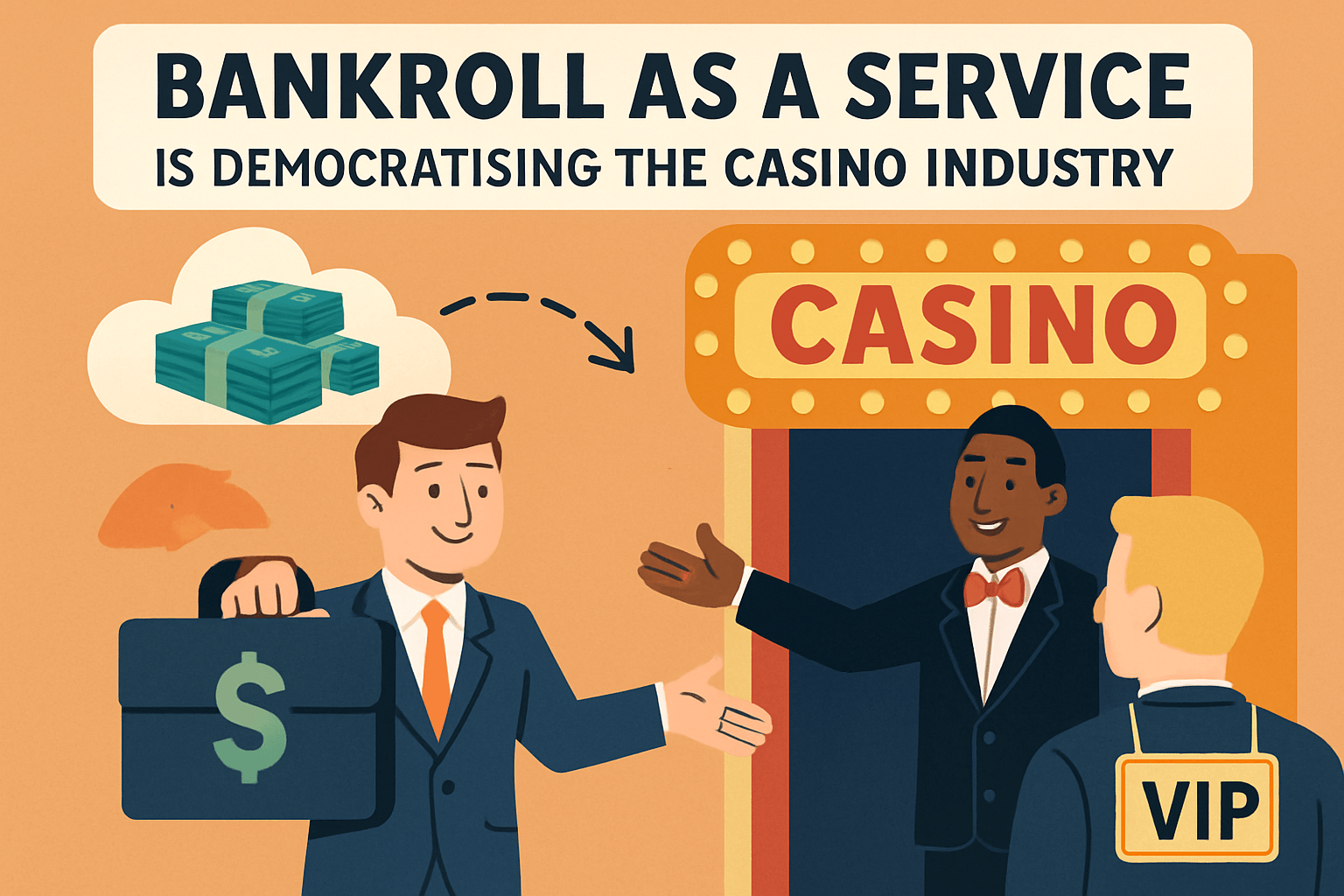
Bankroll-as-a-Service changes that. It lets operators offer high betting limits without funding those liabilities themselves. Bowman’s solution uses outside capital and risk modelling to take on potential exposure.
"We've seen the opportunity to come in, provide a bankroll solution which essentially levels the playing field," Bowman said.
"Allowing any operator to have the same limits that you'd see on Stake, Shuffle, Roobet, etc."
The service is already attracting attention from two main segments: new operators—often influencers or affiliates with traffic but not funds, and existing brands looking to hedge against VIP volatility.
A New Frontier for Creators
"Anyone with an audience, especially someone in the gambling space, they all of a sudden can be a casino owner when this risk is removed," Bowman said.
"We really will be looking at over the next 12 to 24 months at the rise of the streamer that has their casino."
This shift also offers potential upside for nontraditional players, football clubs, charities, media companies, looking to build branded gaming operations without shouldering outsized risk.
Managing Risk and Building Trust
Yet the biggest hurdle for emerging operators is player trust. News cycles often spotlight delayed or unpaid winnings, particularly from lesser-known brands.
"Sometimes you see players not being paid out, which is just the reputation of the casino, and the player trust, we believe, is everything," Bowman said.
Bowman envisions a system where trust is baked into the infrastructure. A certificate of authenticity could publicly confirm that a casino is backed by Bankroll-as-a-Service or similar models, verifying liquidity for large payouts.
"Something like a certificate of authenticity or confirmation that you do hold the funds to pay out, I believe that could be a real game changer," he said.
Global Model, Local Compliance
Though the model is currently most active in the crypto casino world, Bowman sees potential across geographies and regulatory regimes. His company actively ensures compliance with licensing and jurisdictional rules.
"If you're in a position where you're able to legally take big bets, we're here to support it," he said.
"We actually are having some interest at the moment from operators that see it as a positive to be able to prove the ability to pay players to regulators."
What's Next for Bowman?
As the model matures, new use cases emerge monthly. Beyond platforms and game studios, White Swan Data has begun conversations with venture firms, government-run operators, and potential institutional partners.
"There are more and more user cases and partner scenarios which come up on a kind of a weekly and monthly basis that we hadn't considered," Bowman said.
The future of iGaming may still revolve around VIPs. But with models like this, who gets to compete for their action could soon be a much broader field.
"If someone could remove the financial barrier, then that would definitely be something which is more considered," Bowman said. "You're better monetising your traffic, but on top of that, you've got an asset, a sellable asset at the end of it in the form of the casino."
Meet The Author
Experience

 News Writer
Most of my career was spent in teaching including at one of the UK’s top private schools. I left London in 2000 and set up home in Wales raising four beautiful children. I enrolled at University where I studied Photography and film and gained a Degree and subsequently a Masters Degree. In 2014 I helped launch a new local newspaper and managed to get front and back page as well as 6 filler pages on a weekly basis. I saw that journalism was changing and was a pioneer of hyperlocal news in Wales. In 2017 I started one of the first 24/7 free independent news sites for Wales. Having taken that to a successful business model I was keen for a new challenge. Joining the company is exciting for me especially as it is a new role in Europe. I am keen to establish myself and help others to do the same.
Read Full BioRelated News


Test Your Luck
Not Your Spam Filter
Sign up to receive emails and promotions from Casinos.com