Scammers are exploiting online consumers. (Image: Acorn1/Alamy)
Facebook messages claiming you’ve won a car or cash prize may be fronts for illegal lotteries targeting lower-income regions.
Across the UK, Facebook users are being lured by messages claiming they’ve won a lottery, a car, or a large cash prize. In reality, these promotions are often unlicensed prize draws, fronts for fraud that exploit regional vulnerabilities and regulatory gaps. From online casinos to bingo and lotteries to raffles, there is no stopping the scammers who exploit people online.
Regulators say the surge in these scams has turned social platforms into high-risk spaces for illegal lotteries that frequently target users in economically stretched communities. The Department for Culture, Media & Sport has highlighted the issue in a 2025 study on the UK’s online prize draw market, noting consumer protection gaps.
How the scam works
Scammers create posts that mimic legitimate competitions. These messages, “You’ve won!” or “Claim your prize now!”, link users to off-platform pages that request personal details, bank information, or a small “processing fee.” The illusion of legitimacy is critical: fraudsters may pose as charities or known brands.
The Gambling Commission warns that lotteries operated through social media without a licence are likely illegal. According to its guidance, signs of fraud include overseas payment requests, international phone numbers, and vague contact details.
Facebook lotteries: Why Scammers Love Them
Facebook is a favoured hunting ground because it offers broad reach, low cost and limited verification. Unverified pages push fake prize draws, often using cars, cash or holidays as bait, under the guise of “competitions” or “free draws.”
A particular grey area includes so-called prize competitions, which claim to offer free entry options to bypass gambling regulations. Compliance experts note that unless the free entry route is genuinely equal and accessible, the draw could still constitute an illegal lottery.
“Many of the lotteries we see promoted on Facebook are illegal and pose a serious risk to the consumer,” the Gambling Commission stated in a recent blog post.
Some Regions Face Higher Risk
The problem isn’t equally distributed. Areas with higher social media usage, weaker regulatory enforcement or lower economic resilience may see more fraudulent prize promotions. Regions where local media frequently spotlight scams tend to report fewer cases.
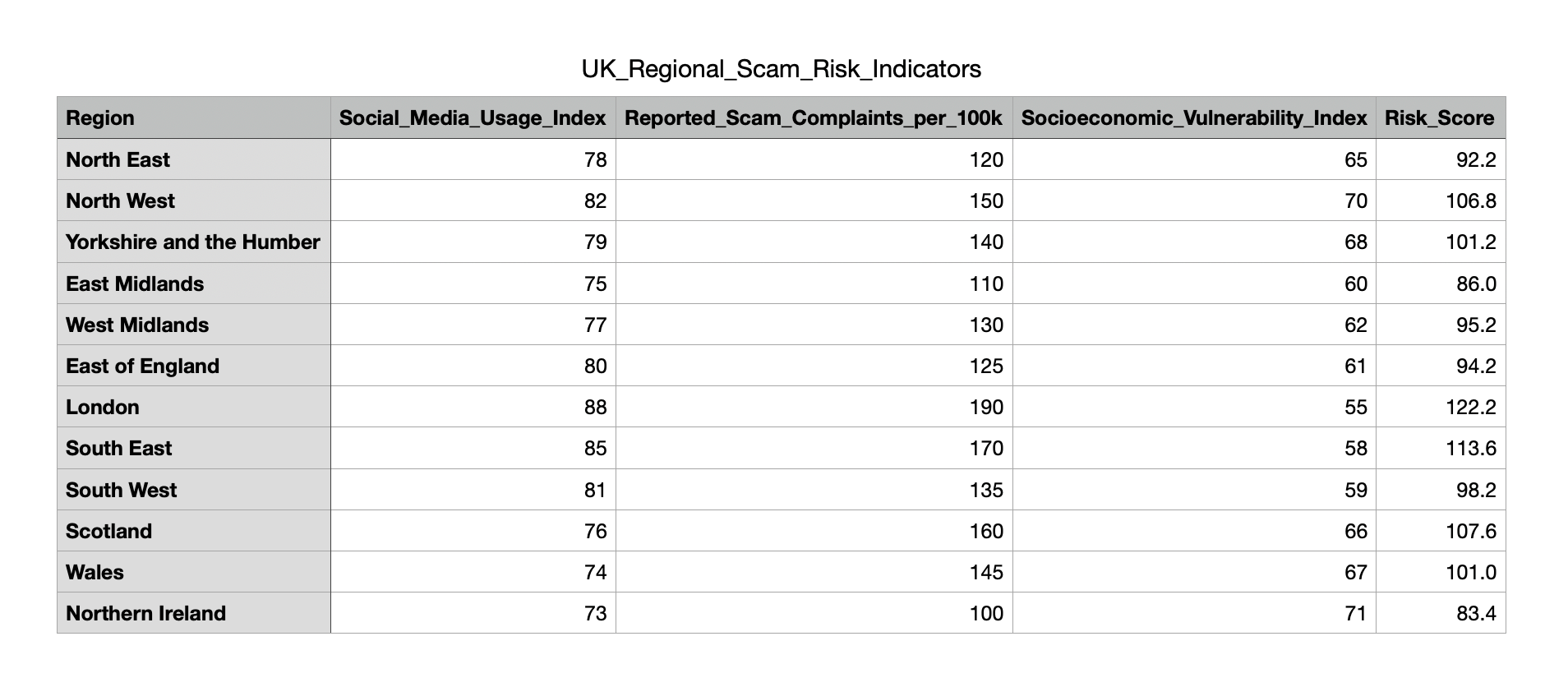
Socioeconomic stress can play a role. In communities facing job insecurity or low wages, the allure of an easy win is stronger. Combined with high Facebook use and lower scam awareness, this creates ideal conditions for fraudsters.
Local councils and police forces vary in how actively they tackle these schemes, adding to the patchy protection. The Gambling Commission encourages reporting and urges consumers to be wary of any prize announcement that comes unprompted.
How to spot a scam draw
Legitimate competitions don’t ask winners to pay. Red flags include:
• You never entered the competition.
• You’re asked to pay a “fee” to claim your prize.
• They request bank details or ID for “verification.”
• Messages come from personal accounts or unverified pages.
• The website lacks secure links or is hosted on generic platforms.
• You’re urged to respond quickly or risk losing the prize.
• Payment is requested via cryptocurrency, wire transfer or gift cards.
The Advertising Standards Authority also warns that any competition must clearly outline terms and provide genuine free entry if advertised as such. Without this, it could breach both advertising and gambling laws.
What regulators are doing, and what you can do
The Department for Culture, Media & Sport’s 2025 review of the prize draw market cited gaps in enforcement and rising consumer complaints. Meanwhile, industry groups are debating a voluntary code of conduct to add transparency.
For individuals, the advice is simple: never pay to claim a prize. Always verify if a competition is registered or licensed and report suspicious activity to Action Fraud. In the UK there is the Business Resilience Centre which also offers advice and the Student Scam Toolkit (prize Draws)..
Meet The Author
Experience

 News Writer
Most of my career was spent in teaching including at one of the UK’s top private schools. I left London in 2000 and set up home in Wales raising four beautiful children. I enrolled at University where I studied Photography and film and gained a Degree and subsequently a Masters Degree. In 2014 I helped launch a new local newspaper and managed to get front and back page as well as 6 filler pages on a weekly basis. I saw that journalism was changing and was a pioneer of hyperlocal news in Wales. In 2017 I started one of the first 24/7 free independent news sites for Wales. Having taken that to a successful business model I was keen for a new challenge. Joining the company is exciting for me especially as it is a new role in Europe. I am keen to establish myself and help others to do the same.
Read Full BioRelated News












Test Your Luck
Not Your Spam Filter
Sign up to receive emails and promotions from Casinos.com