UK’s betting shops and bingo halls help push land-based gambling out of its post-Covid slump. (Image: Casinos.com)
Europe’s land-based gambling industry is officially back in growth mode, with gross gaming revenue (GGR) hitting €76 billion in 2024, up from €74.5 billion the year before. The latest data from the European Gaming and Betting Association (EGBA) shows the sector nearing its pre-Covid peak, as high-street casinos, betting shops, and bingo halls regain lost ground.

The recovery comes after a steep drop in 2020, when lockdowns and venue closures saw land-based GGR plummet to €53.8 billion across the EU-27 and the UK.
According to projections, the trend will continue. Industry analysts expect retail gambling revenue to grow incrementally to €82.4 billion by 2029.
UK Remains a Key Player in the Recovery
The UK’s bricks-and-mortar gambling sector continues to play an outsized role in Europe’s recovery. Betting shops, in-person bingo, and land-based casinos remain major contributors to GGR, even as the UK leads Europe in online gambling market share.

While land-based gambling dominates in most markets, the UK shows particularly strong online penetration with €11.1 billion in online revenue, significantly higher than other major markets such as Italy (€4.6 billion) and France (€3.8 billion).
Physical gambling venues in the UK benefited from the return of live sport, tourism, and social gaming, all areas where in-person experiences still have a clear edge. Bingo halls, in particular, saw a resurgence in 2023–24, following a decade-long decline pre-pandemic.
“There was a steep drop in land-based GGR due to Covid-19 closures in 2020, but we’ve now reached 2019 levels again,” an EGBA spokesperson said. “And the UK’s recovery was one of the strongest across all major markets.”
While the online sector dominates digital growth, analysts say the UK’s high-street gambling infrastructure remains vital. The Gambling Commission reported that retail betting GGR reached £2.5 billion in the year ending March 2023, accounting for nearly 15% of the country’s total gambling revenue.
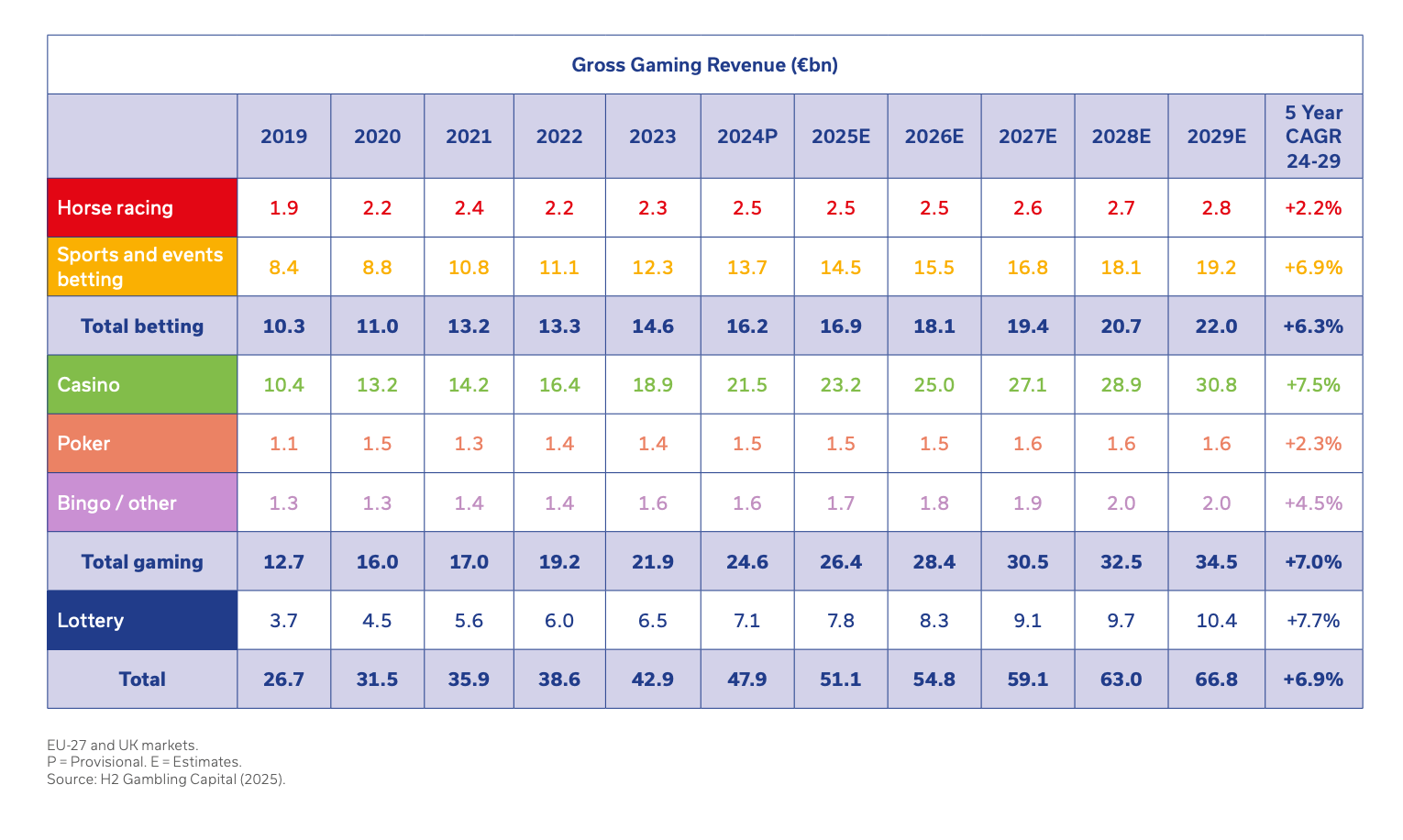
Online gambling revenue is expected to reach €47.9 billion in 2024, with strong growth across most products. Online casino remains the largest contributor at €21.5 billion, followed by sports and events betting at €13.7 billion, with both products projected to grow at around 7% annually through 2029. While smaller in size, the markets for online poker and bingo products are also expected to grow, albeit at slower rates, adding to the diversity of the online gambling ecosystem. Lottery shows the strongest growth outlook at 7.7% annually, expected to reach €10.4 billion by 2029, while the overall online sector is forecast to grow at 6.9% annually to reach €66.8 billion by 2029.
Slower Growth Ahead, but Retail Still Matters
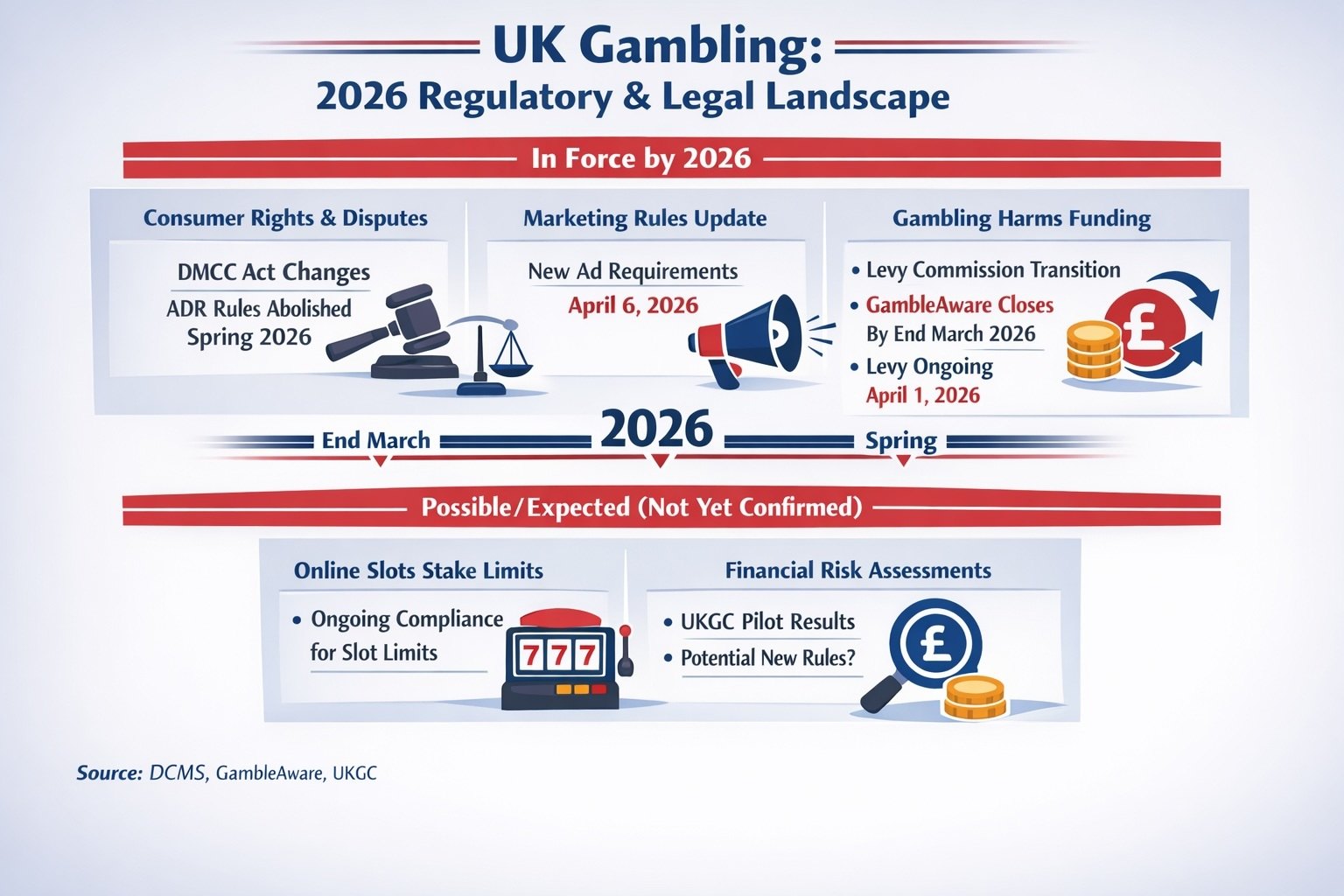
Despite the rebound, experts caution that future gains will likely be modest. Ongoing regulatory reforms in the UK, including stake limits for online slots and tighter affordability checks, are expected to reshape the gambling landscape. These rules could benefit physical venues, especially for lower-stakes players looking for casual, in-person options.
Ai was used to generate this image.
Meanwhile, rising energy bills and rent hikes are putting pressure on operators, and retail growth will hinge on balancing overhead costs with innovation and customer experience.
“We’re seeing more hybrid strategies, where operators invest in digital while also revamping physical spaces to make them more engaging,” said gambling market analyst Laura Da Silva. “This isn’t a land-grab anymore, it’s about footfall and loyalty.”
In-person gaming may no longer dominate the market, but it still holds cultural and economic value across Europe. The UK’s retail sector, though smaller than its digital counterpart, is evolving, not fading.
As EGBA* forecasts show, high-street gambling is no longer in recovery. It’s entering a new phase: regulated, stable, and redefined, but firmly alive.
*EGBA. (April 15, 2025). Gross gaming revenue of the land-based gambling market in Europe from 2019 to 2024, with a forecast until 2029 (in billion euros) [Graph]. In Statista. Retrieved January 14, 2026.
Meet The Author
Experience

 News Writer
Most of my career was spent in teaching including at one of the UK’s top private schools. I left London in 2000 and set up home in Wales raising four beautiful children. I enrolled at University where I studied Photography and film and gained a Degree and subsequently a Masters Degree. In 2014 I helped launch a new local newspaper and managed to get front and back page as well as 6 filler pages on a weekly basis. I saw that journalism was changing and was a pioneer of hyperlocal news in Wales. In 2017 I started one of the first 24/7 free independent news sites for Wales. Having taken that to a successful business model I was keen for a new challenge. Joining the company is exciting for me especially as it is a new role in Europe. I am keen to establish myself and help others to do the same.
Read Full BioRelated News








Test Your Luck
Not Your Spam Filter
Sign up to receive emails and promotions from Casinos.com