Canadians Fed Up With Gambling Adverts, Research Suggests



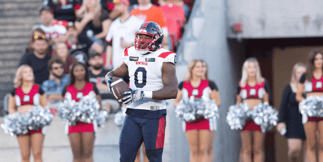
A new study from Leger has found that 75% of Canadians feel inundated with sports betting commercials, while over half think sports betting media deals should end. (Photo: Torontonian / Alamy)
Canadians are sick of sports betting commercials and want to see less of them on television, according to a new report by Leger.
In a poll of 1,621 Canadians, it was revealed that 75% of respondents believe there are too many gambling-related ads on television.
What’s more, over half of bettors surveyed (51%) believe TV channels shouldn’t partner with sports betting companies, a common practice in today’s sports media landscape.
A lucrative deal, beneficial to both broadcasters and operators, these alliances often take shape through in-game odds displayed during live broadcasts, dedicated betting shows, and high-profile sponsorships.
When compared to their American neighbours, Canadians seem much more resistant to gambling-related adverts and the blurred lines between broadcasting and betting.
Just 30% of the 1,015 American bettors surveyed believe there should be a fine line between sports betting and sports media, while only 59% felt there are currently too many sports betting adverts.
Advertising works on Canadians and Americans equally
In terms of the impact of on-screen odds, the North American neighbours are more closely aligned with nearly half of both Canadian and American bettors saying that such prompts makes them more likely to place a bet while watching a game.
Gambling advertising is currently a contentious issue in Canada, with medical professionals expressing concern that frequent exposure, especially to children, could lead to long-term negative effects.
The Canadian Medical Association Journal (CMAJ) recently published an editorial which suggested that sports betting commercials played during sporting events are harming children by exposing them to unhealthy gambling messages.

Ontario, currently the only Canadian province to offer legalized online casinos and sports betting, requires operators and affiliates alike to adhere to a strict set of marketing guidelines.
Since February 2024, the Alcohol and Gaming Commission of Ontario (AGCO) has prohibited the use of athletes, celebrities, social media influencers, and cartoon characters as brand ambassadors or mascots, unless strictly used for responsible gambling campaigns.
Similarly, online casino bonuses, free bets, or similar incentives can only be displayed on a casino’s website - not on any external marketing materials.
This is a contrast to the US where some states in which online gambling is legal allow celeb and athlete endorsements.
Notable examples include New York Yankees shortstop and Hall of Famer Derek Jeter appearing in adverts for BetMGM, and NBA and College Basketball Hall of Fame member Shaquille O’Neal doing similar for DraftKings.
All eyes on Alberta
Despite Canadians seemingly feeling overwhelmed with betting commercials, TV executives have stressed the need for perspective, indicating the number of gambling ads on Canadian television has actually fallen in recent years, tailing off after the initial boom when sports betting was legalized in 2021, and iGaming in Ontario followed the year after.
Speaking at June’s Canadian Gaming Summit (CGS) in Toronto, Catherine MacLeod, CEO of thinkTV, an organisation that offers clearing services to Canadian broadcasters, told a panel of industry leaders:
“The number of gambling ads that we clear every year has gone down, down, down, down, down,” MacLeod said, noting that her organisation had cleared just 88 gambling ads in Canada in the first half of 2025 -- compared to the 35,000 ads it clears annually.
However, should Alberta enter the legalized iGaming market in 2026 as expected, this could all change.
Optimistic estimates have the province opening its digital doors to legalized online casinos and sportsbooks early next year, which would likely mean the provincial government would need to finalize decisions on marketing rules by fall.
Much like Ontario, Alberta will decide for itself what exact advertising rules and regulations it’ll enforce - and this could extend to celebrity and sportstar endorsements.
If so, it could potentially cause a big increase in gambling spots on television, in Alberta at least.
In the interim, Alberta’s provincial government will consult private operators, local land-based casinos, and First Nation tribes, while its new regulatory body, the Alberta iGaming Corporation, will oversee and enforce all rules and regulations once the market has launched.
Meet The Author
Experience

Shane Donnelly is an experienced journalist, writer, and editor who has been working in the online gambling ecosystem for seven years, and the media industry in general for well over a decade. Specializing in the Canadian market, Shane keeps a keen eye on industry trends, market movements, and innovations in gaming tech, always with player welfare at the forefront of his mind. When not staying on top of the latest iGaming developments, he can be found playing water polo with his local team, where he struggles to stay afloat.
Read Full BioRelated News







Test Your Luck
Not Your Spam Filter
Sign up to receive emails and promotions from Casinos.com